

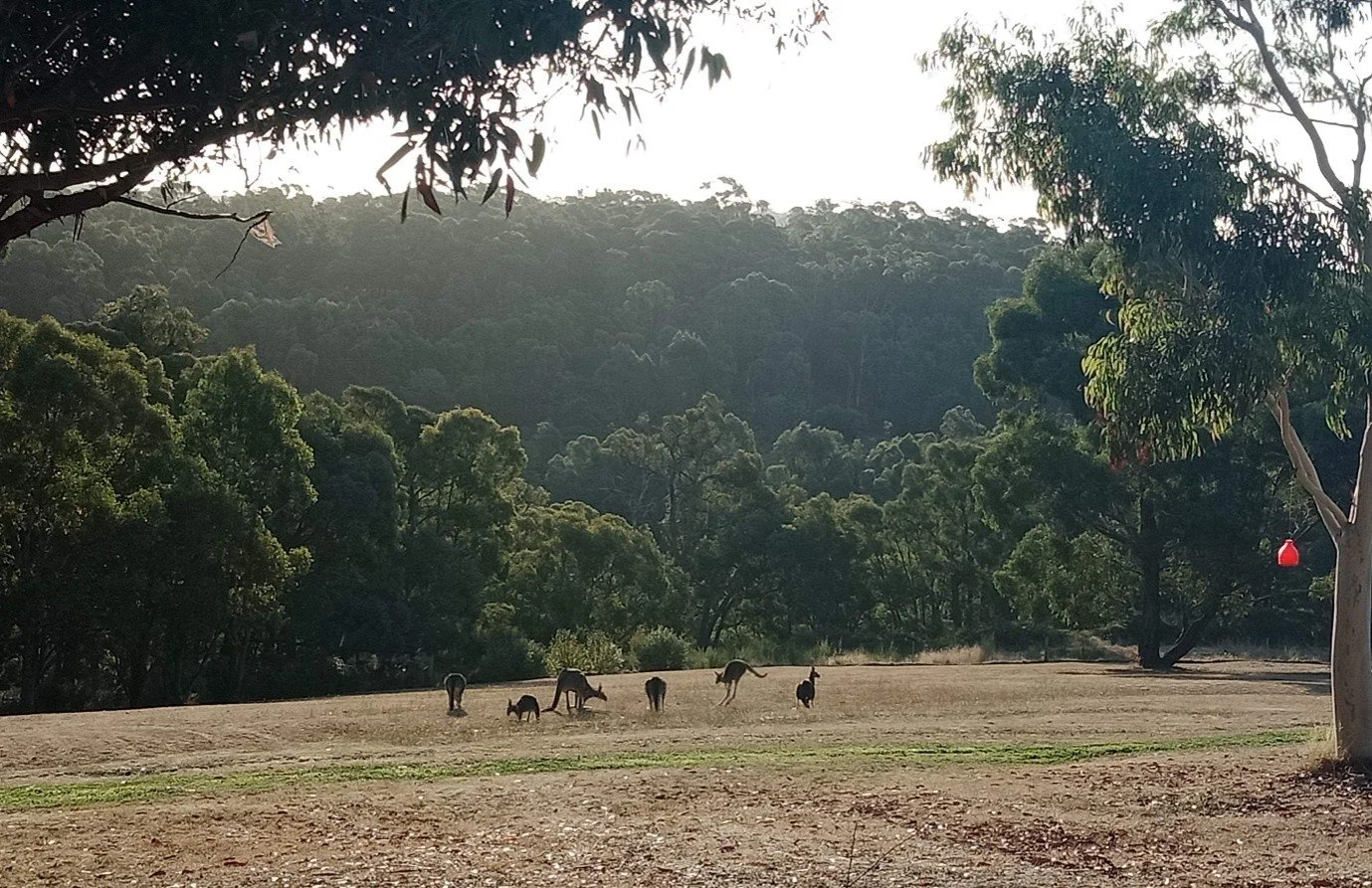
The backyard of the house I was lucky enough to grow up in, shared with some very familiar visitors.
Kangaroos occupy a peculiar position in Australian society. They're on our coat of arms, our national airline, our currency and countless souvenirs. We celebrate them as symbols of our national identity and enthusiastically promote them to the rest of the world.
Yet these same animals are commercially harvested for their meat, killed in government-authorised control programs and condemned as pests.
So how did we arrive at such a contradictory relationship with kangaroos, and what might it take to imagine a different one?
A problem of our own making
For tens of thousands of years, Aboriginal peoples have lived alongside kangaroos, incorporating them into food systems, cultural practices and relationships with Country. These relationships vary across Nations and are grounded in sophisticated systems of ecological knowledge and land management.
European invasion and the colonisation that followed profoundly disrupted these relationships and transformed the environments kangaroos inhabited.
Forests and woodlands were cleared for agriculture, native vegetation gave way to pasture, fences divided landscapes, and artificial water sources were established to support livestock. Dingoes were extensively persecuted, disrupting longstanding predator–prey relationships. Kangaroos found themselves living in a dramatically altered world.
Some of these changes created favourable conditions for certain kangaroo species, particularly where open grazing land and reliable water became more readily available. Others destroyed habitat or disrupted existing ecological relationships (McLeod & Hacker, 2019).
As agriculture expanded, kangaroos were increasingly regarded as competitors for food and water. Their presence became an impediment to agricultural productivity, and their numbers something to regulate and control.
Like so much of Australia's history, it's a deeply uncomfortable story. We have profoundly altered the landscapes kangaroos inhabit, yet the kangaroos themselves are often blamed for the conflicts that follow.
When abundance becomes a ‘problem’
We're accustomed to thinking about conservation in terms of scarcity. Endangered species need protection, declining populations need intervention, and the disappearance of wildlife is rightly a cause for concern.
But what happens when native animals are considered abundant?
In some Australian landscapes, intensive kangaroo grazing has been associated with reduced vegetation, changes in soil conditions and lower numbers of ground-dwelling reptiles (Howland et al., 2014; Braden et al., 2021). Farmers also raise concerns about competition for pasture and water, particularly during drought.
These impacts deserve considered attention, but they must be understood in the context of landscapes already heavily altered by agriculture and habitat fragmentation. Researchers disagree about the extent to which kangaroos should be blamed for environmental degradation, particularly when livestock grazing and other human activities are also contributing factors (Croft & Witte, 2021).
Kangaroo populations are also highly responsive to environmental conditions. Good rainfall can support rapid population growth, while drought and other environmental pressures can cause devastating declines. As a result, population numbers can look very different from one year to the next (Juillard & Ramp, 2022).
Even determining how many kangaroos exist is far from straightforward. Population estimates rely on aerial surveys and statistical modelling across enormous, often inaccessible landscapes. The methods and assumptions used to calculate these figures have themselves been contested, raising questions about the certainty of the numbers used to inform management decisions (Brooks, 2022).
All of which raises a deceptively simple question: how many kangaroos is too many?
Too many for the available vegetation? Too many for other native species? Too many for agricultural production? Or simply too many for the people who would prefer they weren't there?
These questions are important because when we decide a population has become excessive, the consequences for the animals themselves can be enormous.
The individuals behind the numbers
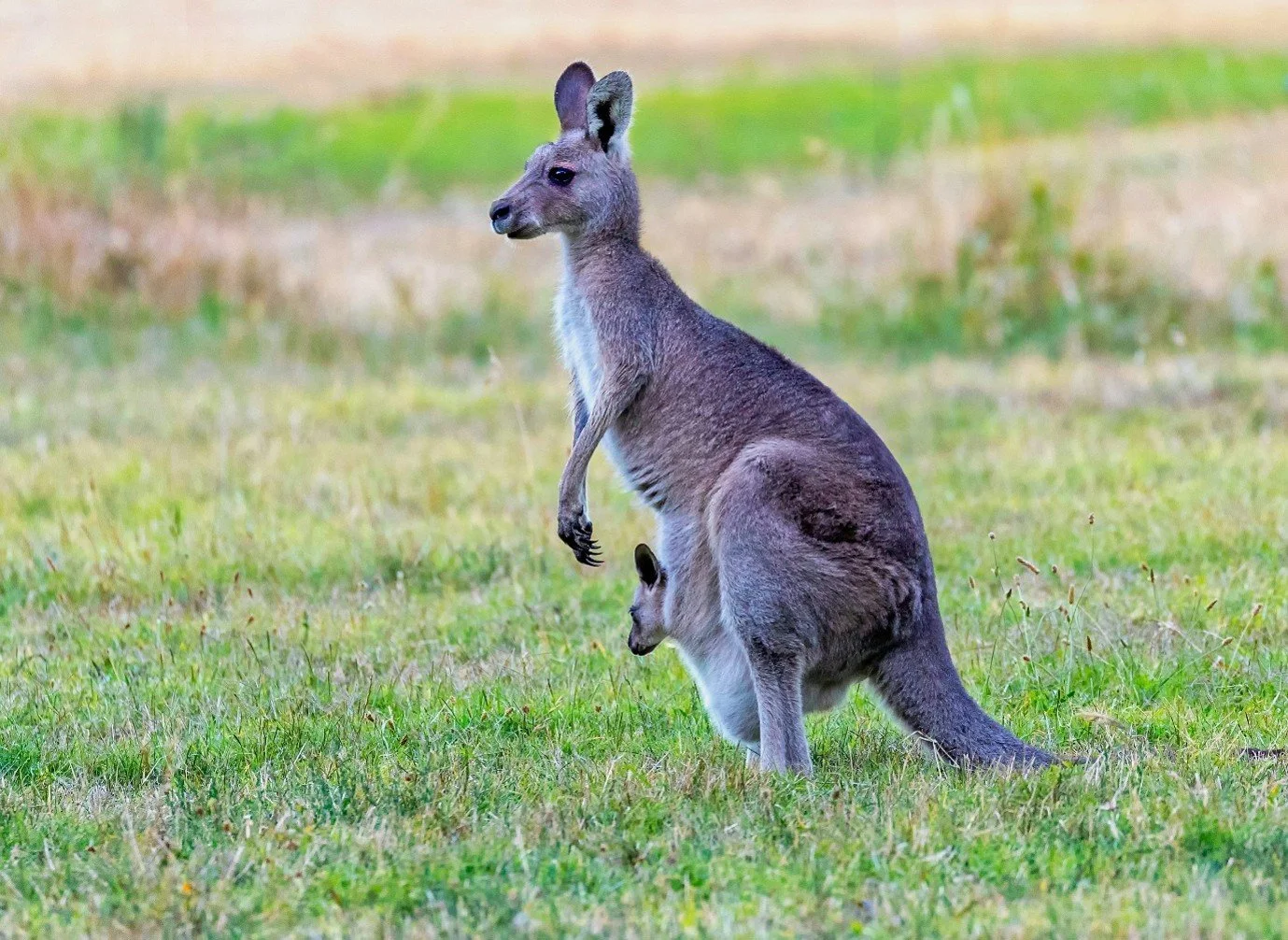
Behind population figures are individual kangaroos, with relationships and lives of their own.
One of the things I find most troubling about debates over kangaroo populations is how easily the animals themselves disappear from the discussion. We talk about population estimates, grazing pressure, harvesting quotas and ecological carrying capacity. Kangaroos become numbers to be counted, resources to be managed and problems to be solved.
But kangaroos are not simply grazing units on a landscape.
They're highly social animals, with relationships, preferences and individual histories. Research by Campbell and Ord (2023) found that wild eastern grey kangaroos form lasting social relationships, with some individuals maintaining preferred associations across multiple years. Mothers with young were often among the most socially connected members of their groups.
These findings add to what wildlife carers, rescuers and others who spend time with kangaroos have long observed. They also raise important questions about the consequences of disrupting their lives and relationships.
What happens to a joey whose mother is shot while they're nestled in her pouch? What becomes of a young kangaroo who survives but loses the individual on whom their life depends? And what are the consequences of repeatedly frightening, killing and disrupting members of established social groups?
We don't know precisely how every kangaroo experiences these events. But we know enough about their capacity for fear, pain, stress and social attachment to take these questions seriously.
Yet the experiences of individual animals are too easily overshadowed by the language of population management. A successful reduction in numbers tells us very little about the suffering involved in achieving it.
This is one reason I find the principles of compassionate conservation compelling.
Compassionate conservation asks us to consider the welfare and intrinsic value of individual animals alongside broader conservation goals (Wallach et al., 2018). Its guiding principle, first, do no harm, challenges the assumption that killing animals is an acceptable default response to ecological or human–wildlife conflict.
This approach is contested. Critics argue that prioritising individual animals can sometimes undermine efforts to protect threatened species or entire ecosystems (Hayward et al., 2019). These are important questions, especially where the welfare of different animals comes into conflict.
But recognising those complexities shouldn't mean accepting lethal control as inevitable, or treating the suffering it causes as an unfortunate but unremarkable administrative detail.
What could more empathetic coexistence look like?
There are alternatives to lethal kangaroo management, although none offers a universal solution. Depending on the landscape and circumstances, these may include habitat management, exclusion fencing and fertility control.
Research into contraceptive implants and vaccines, for example, has demonstrated potential for managing population growth in some kangaroo populations (Wimpenny et al., 2021). These approaches have practical limitations, particularly across large, open landscapes, but they deserve consideration and investment.
We should also be asking more fundamental questions about the environments we've created. If agricultural practices, artificial water sources, habitat fragmentation and predator persecution have helped shape contemporary kangaroo populations, surely those factors belong at the centre of our response?
And given the long history of Aboriginal relationships with kangaroos, shouldn't the ecological knowledge, cultural responsibilities and perspectives of Traditional Owners play a much greater role in shaping how we manage these animals and the landscapes they inhabit?
I don't pretend these questions are easily resolved. Managing shared landscapes involves competing needs, ecological uncertainty and difficult decisions. Developing less harmful approaches requires research, resources and a willingness to reconsider practices that have become established.
But I struggle to accept that killing kangaroos on a large scale should remain such a routine part of how we respond to their presence, particularly when so little consideration is given to the animals themselves.
The question of belonging
Perhaps the greatest contradiction in our relationship with kangaroos is that we celebrate them for being ‘Australian’ while treating their presence as negotiable.
The story of kangaroo abundance is ultimately about the environments we've created, the animals we've chosen to accommodate and the extent to which we're prepared to take responsibility for the consequences of our own actions.
Conservation understandably devotes enormous attention to animals at risk of disappearing. But supposedly abundant animals deserve our ethical consideration too. Their lives don’t become less meaningful simply because there are more of them.
Kangaroos were here long before our farms, fences and suburbs. We’ve profoundly changed the world they inhabit. The least we can do is approach the question of how to share it with a little more humility, imagination and compassion.
References
Braden, J. et al. (2021). Impacts of grazing by kangaroos and rabbits on vegetation and soils in a semi-arid conservation reserve. Journal of Arid Environments, 190. https://doi.org/10.1016/j.jaridenv.2021.104526
Brooks, D. (2022). The number game: Counting kangaroos. Animal Studies Journal, 11(1), 1–36. https://doi.org/10.14453/asj/v11i1.1
Campbell, N. E., & Ord, T. J. (2023). Wild kangaroos become more social when caring for young and may maintain long-term affiliations with popular individuals. Animal Behaviour, 205, 183–195. https://doi.org/10.1016/j.anbehav.2023.08.011
Croft, D. B., & Witte, I. (2021). The perils of being populous: Control and conservation of abundant kangaroo species. Animals, 11(6). https://doi.org/10.3390/ani11061753
Hayward, M. W. et al. (2019). Deconstructing compassionate conservation. Conservation Biology, 33(4), 760–768. https://doi.org/10.1111/cobi.13366
Howland, B. et al. (2014). Eaten out of house and home: Impacts of grazing on ground-dwelling reptiles in Australian grasslands and grassy woodlands. PLOS ONE, 9(12). https://doi.org/10.1371/journal.pone.0105966
Juillard, L. Q., & Ramp, D. (2022). The impacts of drought on the health and demography of eastern grey kangaroos. Animals, 12(3). https://doi.org/10.3390/ani12030256
McLeod, S. R., & Hacker, R. B. (2019). Balancing stakeholder interests in kangaroo management: Historical perspectives and future prospects. The Rangeland Journal, 41(6), 567–579. https://doi.org/10.1071/RJ19055
Wallach, A. D. et al. (2018). Summoning compassion to address the challenges of conservation. Conservation Biology, 32(6), 1255–1265. https://doi.org/10.1111/cobi.13126
Wimpenny, C. et al. (2021). Fertility control for managing macropods: Current approaches and future prospects. Ecological Management & Restoration, 22(S1), 147–156. https://doi.org/10.1111/emr.12461
