

The world through your dog’s senses
We see the world very differently to our dogs. And many behaviours we find perplexing, or even frustrating, only start to make sense when we begin to look at the world from their perspective.
It’s not uncommon for a dog who is barking at “nothing”, ignoring a recall, refusing to walk on a certain surface, or becoming fixated on something in the distance to be labelled stubborn or wilful. Yet these responses are often rooted in information we simply don’t perceive in the same way.
I remember first coming across the concept of umwelt in the book Inside of a Dog by Alexandra Horowitz. It describes the idea that every species experiences its own unique sensory world, shaped by what it can detect, prioritise, and respond to. Dogs aren’t just seeing a slightly different version of our world. They are, in many ways, living in a different one entirely.
Stepping into their paws doesn’t just make things more interesting. It changes how we interpret what’s happening in front of us, and often shifts the kinds of solutions we reach for.
So how is the world constructed, from a dog’s point of view?
Sight
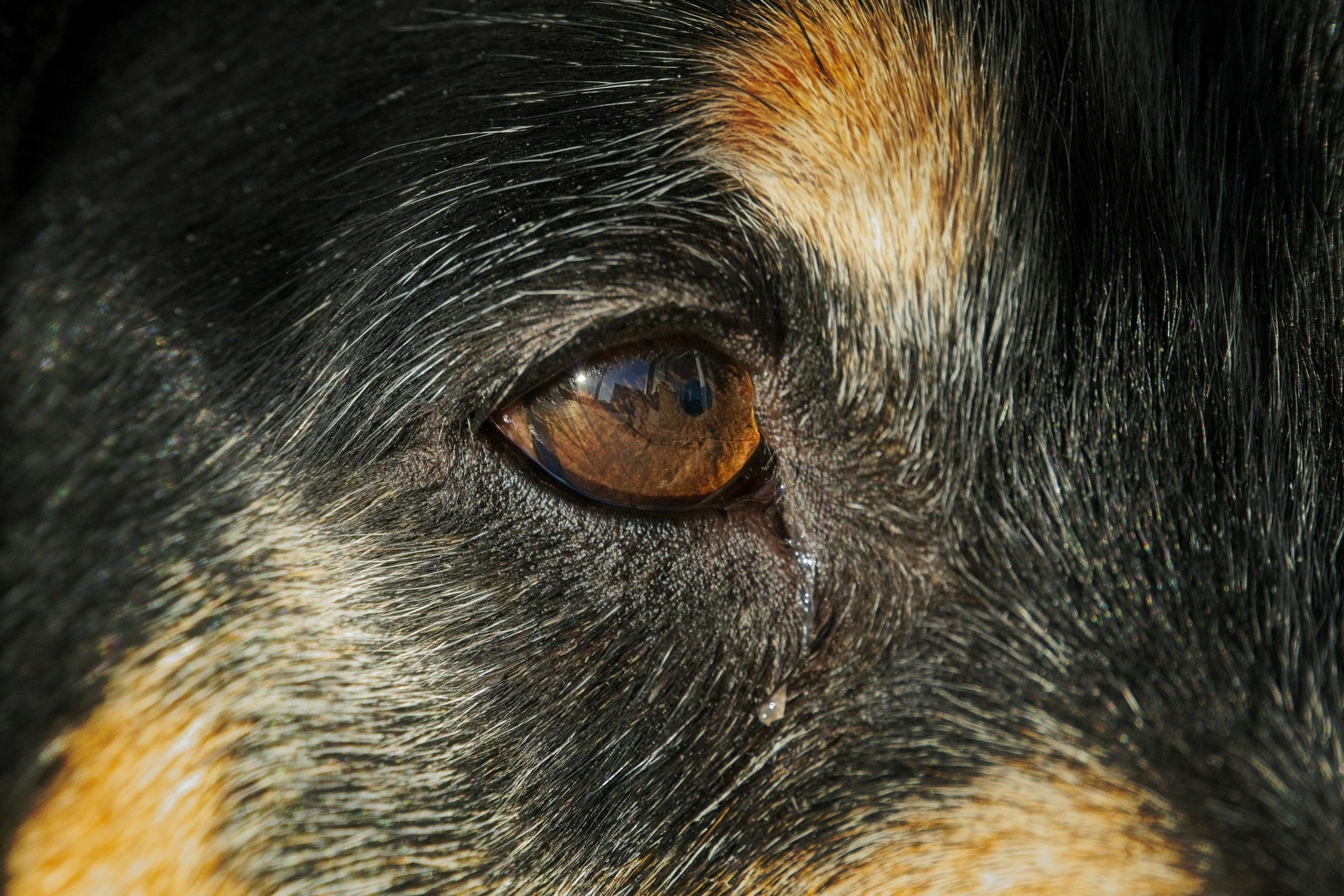
I often get asked if dogs only see in black and white. Contrary to popular belief, dogs can see some colour, mainly blues and yellows, but not the full spectrum that we can. Their world isn’t black and white, but it is more limited and less saturated.
Dogs also see less fine detail than we do. Where humans have sharp, high-resolution vision, dogs tend to see a softer, blurrier version of the world. If you’ve ever thrown something for your dog and watched them search around for it even though it’s right in front of them, this is often why.
Where dogs excel is in low light and movement detection. Their eyes are adapted to pick up motion quickly, and they have a higher proportion of rod cells in the retina, which support vision in dim light. Many dogs also have a reflective layer behind the retina (the tapetum lucidum), which improves their ability to see at dawn and dusk.
Movement, in particular, is highly salient. A small flicker or shift in the environment can stand out to a dog in a way it simply doesn’t for us. This is part of why dogs can become so quickly locked onto birds, wildlife, or fast-moving objects.
Many dogs, particularly those with eyes positioned more to the sides of their heads (like greyhounds), also have a much wider field of vision than we do, sometimes up to around 240–270 degrees depending on head shape. The trade-off is reduced depth perception and detail straight ahead.
Smell
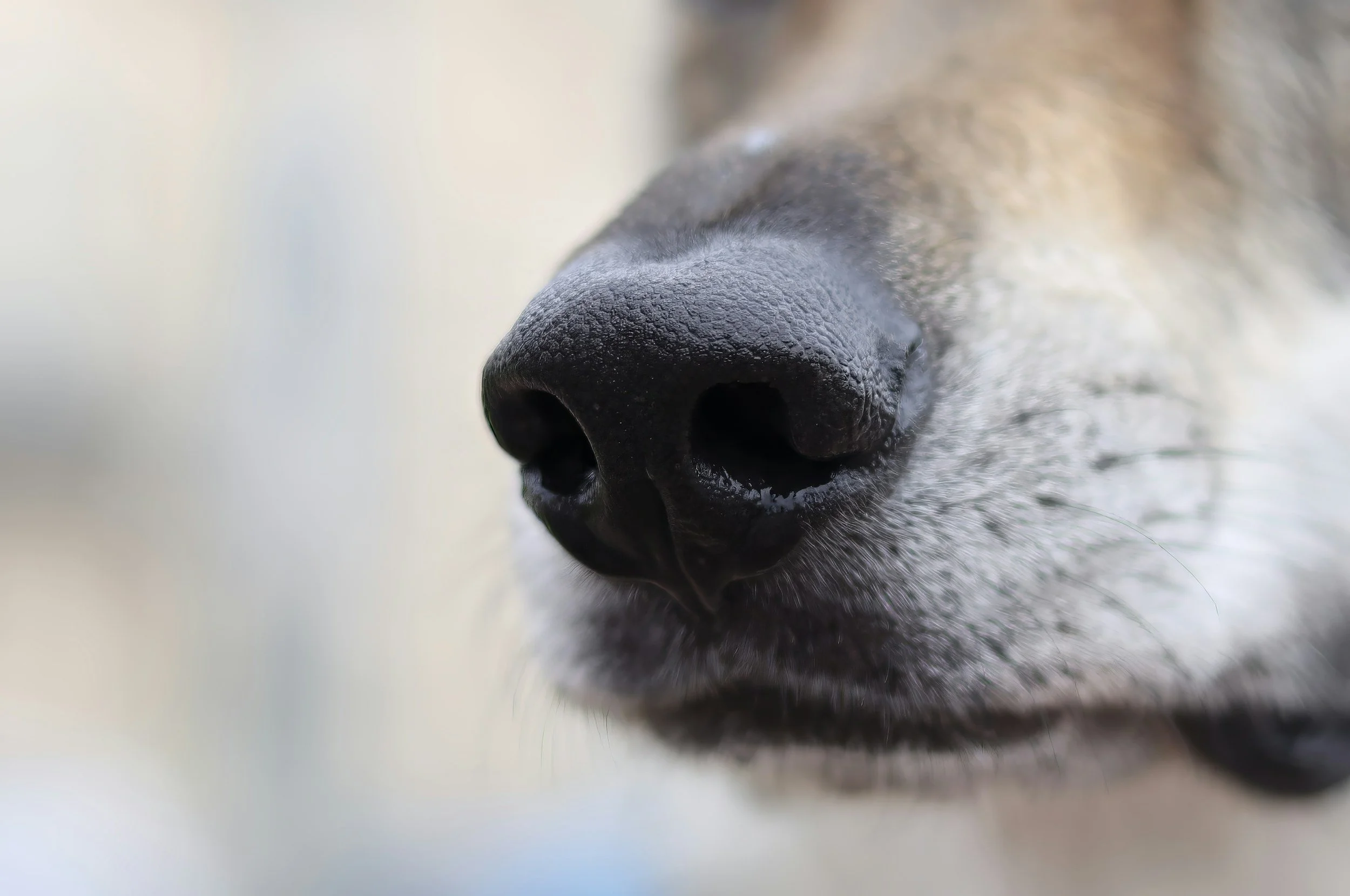
We interpret the world largely through sight. For dogs, it’s all about the nose.
Dogs have somewhere between 100 and 300 million scent receptors, compared to our roughly 5–6 million. The part of their brain dedicated to processing smell is also proportionally much larger than ours.
But it’s not just about sensitivity. It’s about how smell is used.
Dogs don’t just detect odours, they analyse them. Each sniff can provide layered information about identity, emotional state, health, movement, and time. Scent also lingers and shifts, meaning dogs are often interacting with a version of the environment that includes what was there, not just what is.
They also have a specialised system (the vomeronasal or Jacobson’s organ) that detects chemical signals like pheromones, adding another layer to how they interpret the world.
When a dog stops to sniff, they’re not being distracted or slowing you down for no reason. They’re actively gathering information. From their perspective, this is meaningful engagement with the environment.
Which is why walks that include time to sniff are often more satisfying and regulating than walks that prioritise constant forward movement. The key takeaway? Let. Them. Sniff.
Hearing
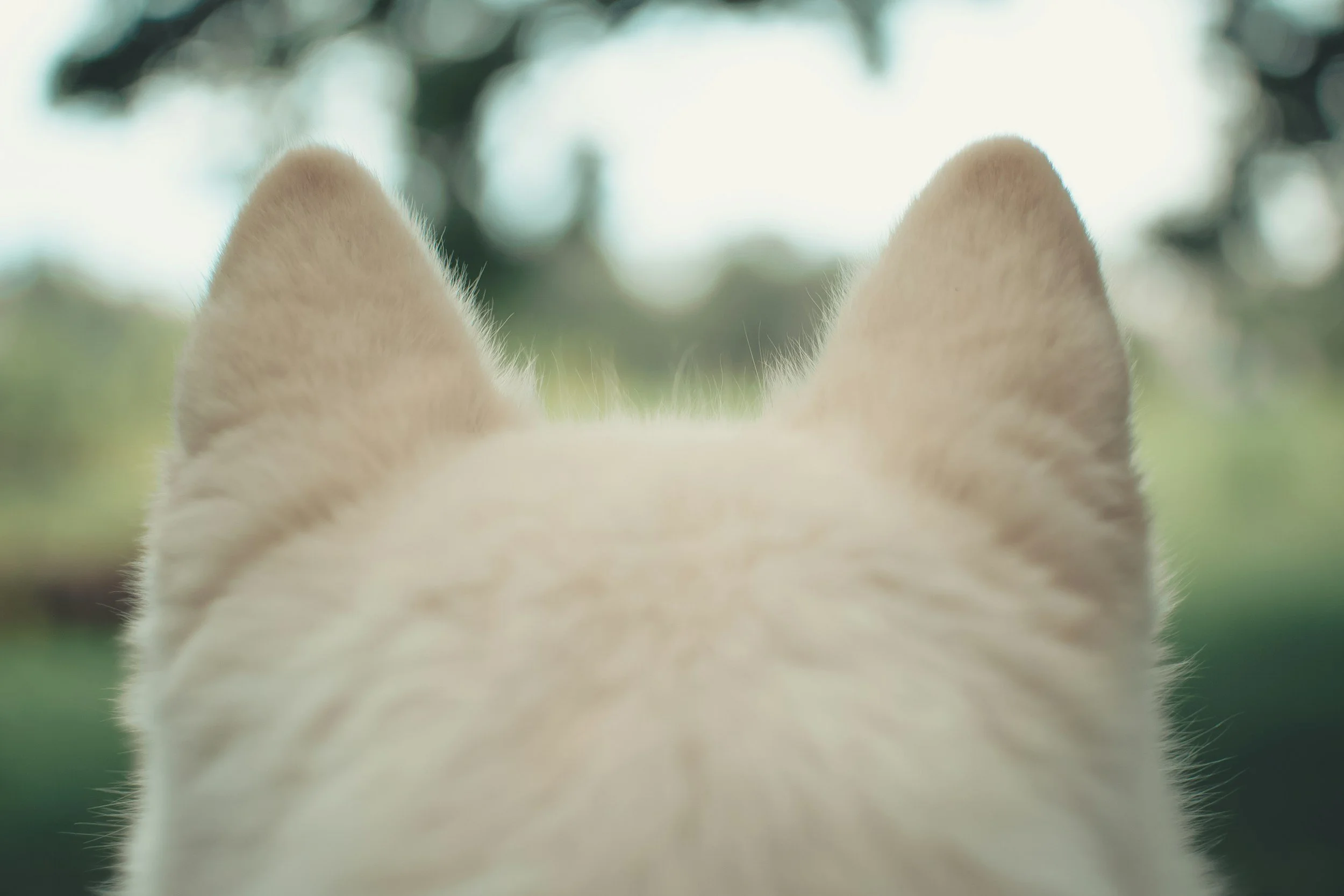
Puppies are born deaf and begin to hear at around two to three weeks of age. Once their hearing develops, it exceeds our own in both range and sensitivity.
Dogs can detect much higher frequency sounds than we can (up to around 60,000 Hz, compared to our upper limit of around 20,000 Hz), and they can pick up quieter sounds from greater distances.
They also have around 18 muscles in their ears, allowing them to move and orient toward sound with impressive precision. This means they can locate where a sound is coming from far more accurately than we can.
For many dogs, sound plays a significant role in how safe or unsafe an environment feels. Sudden or unpredictable noises, particularly those we barely notice (like high-pitched electronics, distant machinery, thunder, or subtle environmental sounds), can influence behaviour in ways that aren’t immediately obvious.
So when your dog appears to be reacting to “nothing”, it’s very likely that something is there, just outside your own sensory range.
Taste
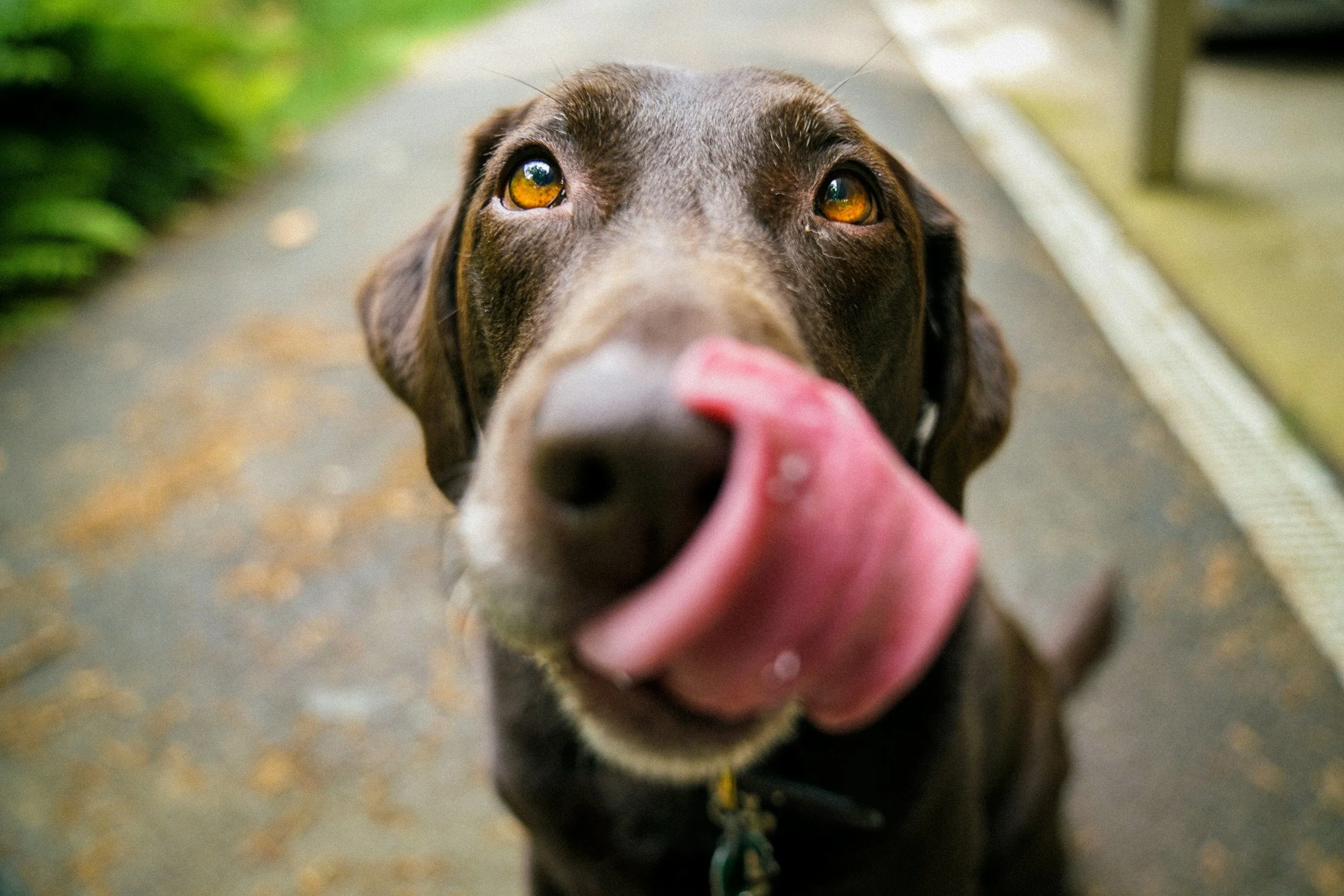
A dog’s sense of taste is less developed than ours. They have around 1,700 taste buds, compared to our roughly 9,000, and rely far more heavily on smell when deciding what to eat.
Interestingly, dogs also have taste receptors that respond specifically to water, and these appear to become more sensitive after eating. They’re linked to the same areas of the tongue that process savoury (umami) flavours, which means a meal can effectively “prime” the system. It’s likely one of several reasons some dogs seem especially drawn to water after eating, alongside more obvious factors like thirst and the salt content of their food.
Because smell plays such a large role, food that smells stronger is often more appealing, regardless of how it might taste. This is why warming food, changing texture, or adding scent can sometimes make a bigger difference than changing flavour alone.
Touch
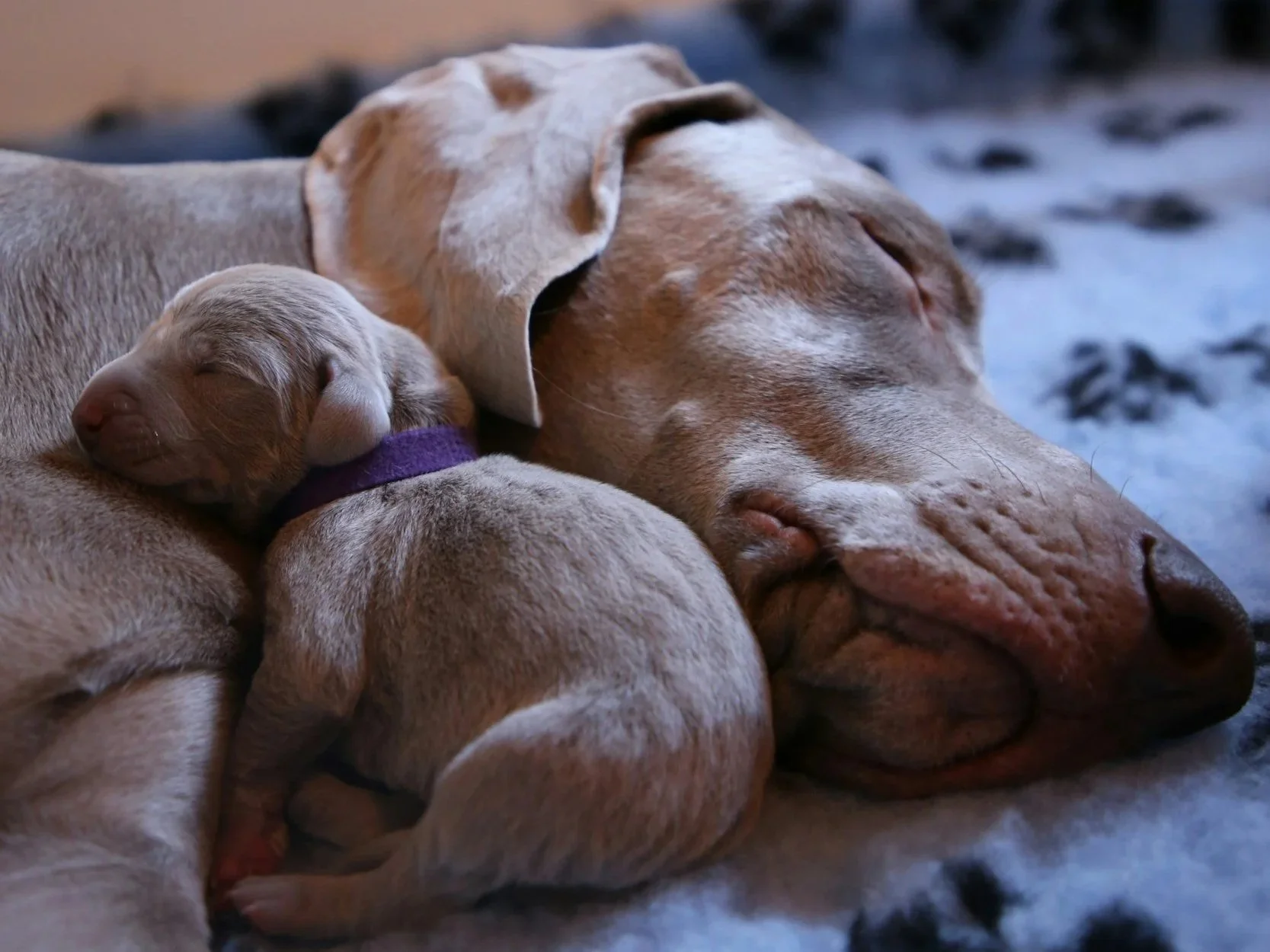
Touch is the first sense a dog experiences. Mothers begin licking and nuzzling their puppies almost immediately after birth, and this early contact plays an important role in development and bonding.
Dogs have touch-sensitive nerve endings across their bodies, including in their paws and through their whiskers (vibrissae), which help them detect subtle changes in air movement and nearby objects.
Touch also plays a key role in social interaction. However, not all touch is experienced the same way. Gentle, predictable contact can be calming and affiliative, while restraint, looming, or unexpected handling can feel uncomfortable or threatening.
This is why context matters so much. A dog who enjoys being stroked may still find certain types of handling stressful, particularly in busy or unpredictable environments.
Body awareness (proprioception)
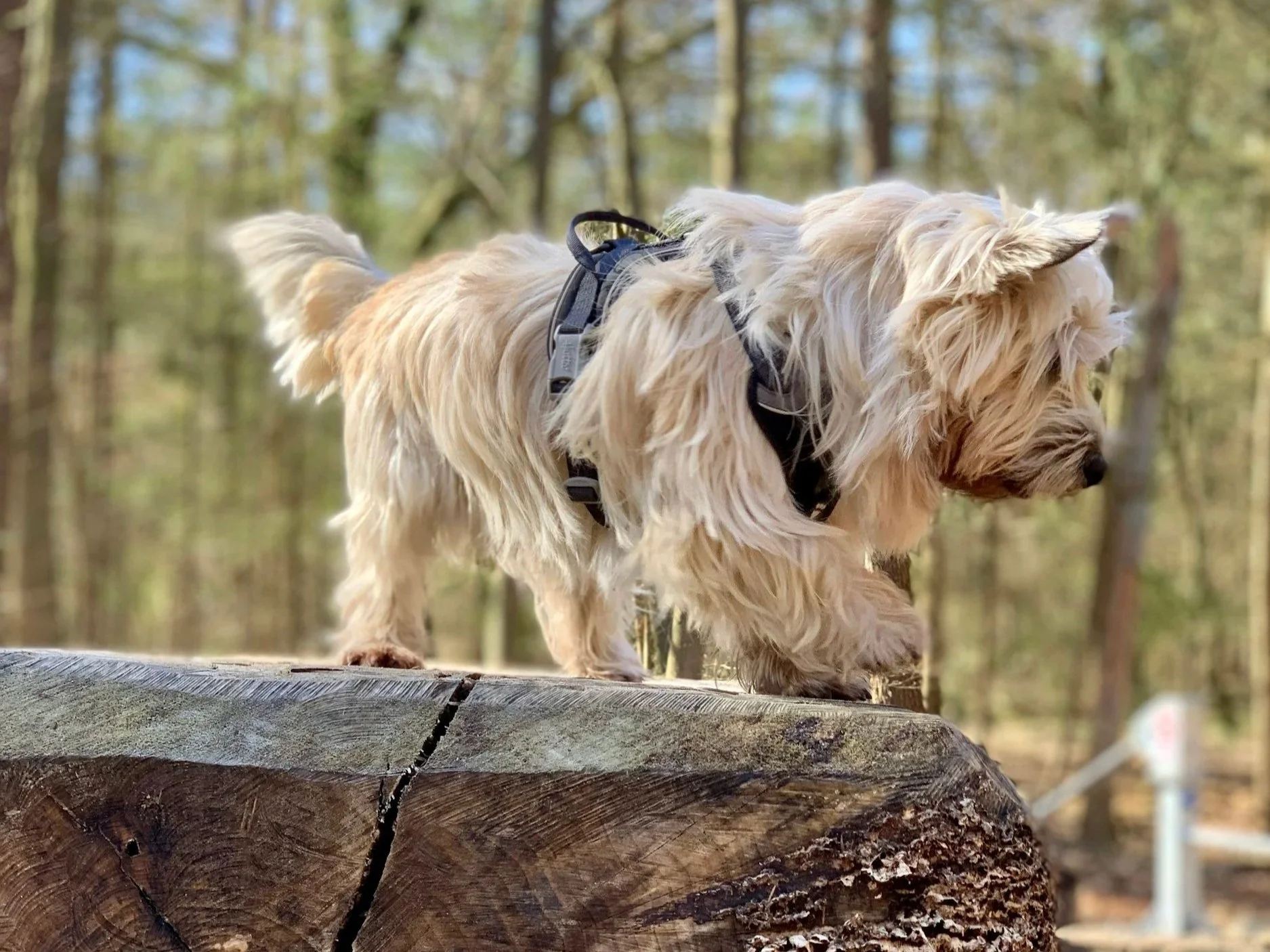
There’s another sense that’s often overlooked, but hugely important: proprioception.
This is a dog’s awareness of where their body is in space. It’s built from continuous feedback from muscles, joints, and tendons, and allows dogs to move smoothly, balance, jump, turn, and navigate their environment without needing to consciously think about where their body is.
When proprioception is working well, movement looks effortless. Dogs adjust their stride, shift their weight, and move through space with very little visible effort. When it’s challenged, you might see slipping, hesitation, clumsiness, or reduced confidence in certain environments.
This system develops over time. Puppies are still learning how their bodies work, and balance can be a challenge. During adolescence, rapid changes in body size and proportions can also impact proprioception. Many young dogs go through a phase of increased jumping, climbing, and general physical exploration as they learn to coordinate all these systems.
Different body shapes also influence how dogs experience movement. Long limbs, short legs, large bodies, or rapid growth phases all change the demands placed on coordination. As dogs move through the world, they’re constantly refining how their bodies work. Adjusting to different terrains, navigating obstacles, changing speed and direction, balancing - all of these movements provide feedback that helps them calibrate over time.
Dogs who have regular opportunities to move in varied environments tend to develop a more flexible, confident sense of their own bodies. They learn how to adapt, how to recover from small missteps, and how to move efficiently across changing conditions. When those opportunities are limited, whether through restricted space, highly controlled environments, injuries, or simply a lack of variety, that feedback loop becomes narrower. Some dogs may begin to hesitate, avoid certain situations, or move more cautiously.
You might also notice changes under different levels of arousal. Highly excited or stressed dogs often move less precisely, misjudging distances or struggling to coordinate their bodies as effectively. For some dogs, what looks like a training issue is actually a physical or sensory one.
When you start to see the world through these different sensory systems, behaviour begins to look less like a problem and more like a response. And that shift changes what feels possible, because you’re no longer working against the dog’s experience of the world, but alongside it.
References
Bensky, M.K., Gosling, S.D. and Sinn, D.L. (2013) ‘The world from a dog’s point of view: A review and synthesis of dog cognition research’, Advances in the Study of Behavior, 45, pp. 209–406.
Bradshaw, J. (2011) Dog sense: How the new science of dog behavior can make you a better friend to your pet. New York: Basic Books.
Craven, B.A., Paterson, E.G. and Settles, G.S. (2010) ‘The fluid dynamics of canine olfaction: Unique nasal airflow patterns as an explanation of macrosmia’, Journal of the Royal Society Interface, 7(47), pp. 933–943.
Heffner, H.E. (1983) ‘Hearing in large and small dogs: Absolute thresholds and size of the tympanic membrane’, Behavioral Neuroscience, 97(2), pp. 310–318.
Horowitz, A. (2009) Inside of a dog: What dogs see, smell, and know. New York: Scribner.
Levine, D., Millis, D.L. and Marcellin-Little, D.J. (2014) Canine rehabilitation and physical therapy. 2nd edn. St. Louis, MO: Elsevier Saunders.
Miller, P.E. and Murphy, C.J. (1995) ‘Vision in dogs’, Journal of the American Veterinary Medical Association, 207(12), pp. 1623–1634.
Walker, D.B., Walker, J.C., Cavnar, P.J., Taylor, J.L., Pickel, D.H., Hall, S.B. and Suarez, J.C. (2006) ‘Naturalistic quantification of canine olfactory sensitivity’, Applied Animal Behaviour Science, 97(2–4), pp. 241–254.
