

Make your home a sanctuary for your dog
A few weeks ago I launched what can only be described as a domestic intervention: Operation Slippery Floors. Our house has mostly wooden floors. They’re easy to clean and look lovely in the afternoon light. The problem is that from a dog’s perspective, polished timber floors are essentially an indoor ice rink.
One afternoon I watched Zelda skid sideways attempting a tight corner near the hallway. Watching it, I had a sudden, slightly embarrassing realisation. I used to be very tuned into this.
My previous dog had three legs. He had lost a limb many years before we adopted him, and traction and stability were constant considerations in our home. Mats were everywhere. Non-slip rugs lined hallways. I obsessively scrutinised accommodation photos before every holiday, to make sure he’d be comfortable.
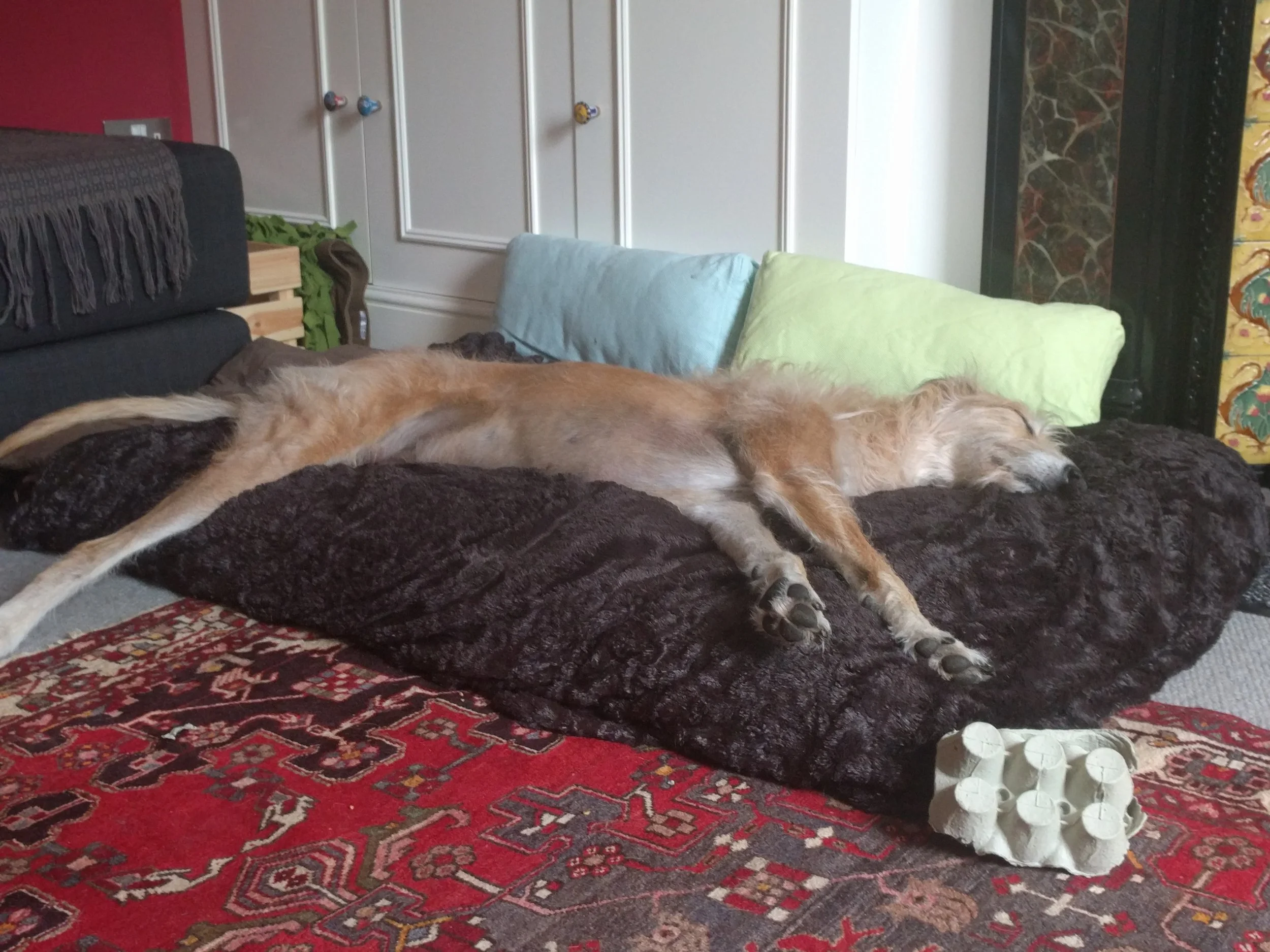
Pedro had mobility issues due a missing limb so soft furnishings, rugs, and carpets were vital for his comfort.
But with my two young, healthy dogs? For some reason I’d lost my non-slip flooring obsession. Which is how Operation Slippery Floors began. Rugs, mats and runners have been arriving at an impressive rate, and the dogs are already moving through the house with noticeably more confidence.
It made me think about something that’s easy to overlook: dog comfort in human homes.
Not just whether dogs are allowed on the couch, but whether the environment itself works for their bodies and senses.
Can your dog move comfortably through your home?
Slipping isn’t just a momentary annoyance for dogs. Repeated slipping changes how dogs move through their environment. Many will slow down, avoid certain areas, or develop cautious movement patterns. Others do the opposite and barrel through anyway, which can increase the risk of muscle strains or joint injuries. Puppies, in particular, can be prone to much slipping and sliding as their bodies develop.
Veterinary physiotherapists often emphasise traction as one of the simplest ways to protect joints and mobility. When dogs can push off properly with their limbs, their bodies move in a way that distributes load more evenly.
Rugs, runners, yoga mats, and rubber-backed carpets can all make a huge difference, particularly in high-traffic zones like hallways, doorways, and feeding areas.
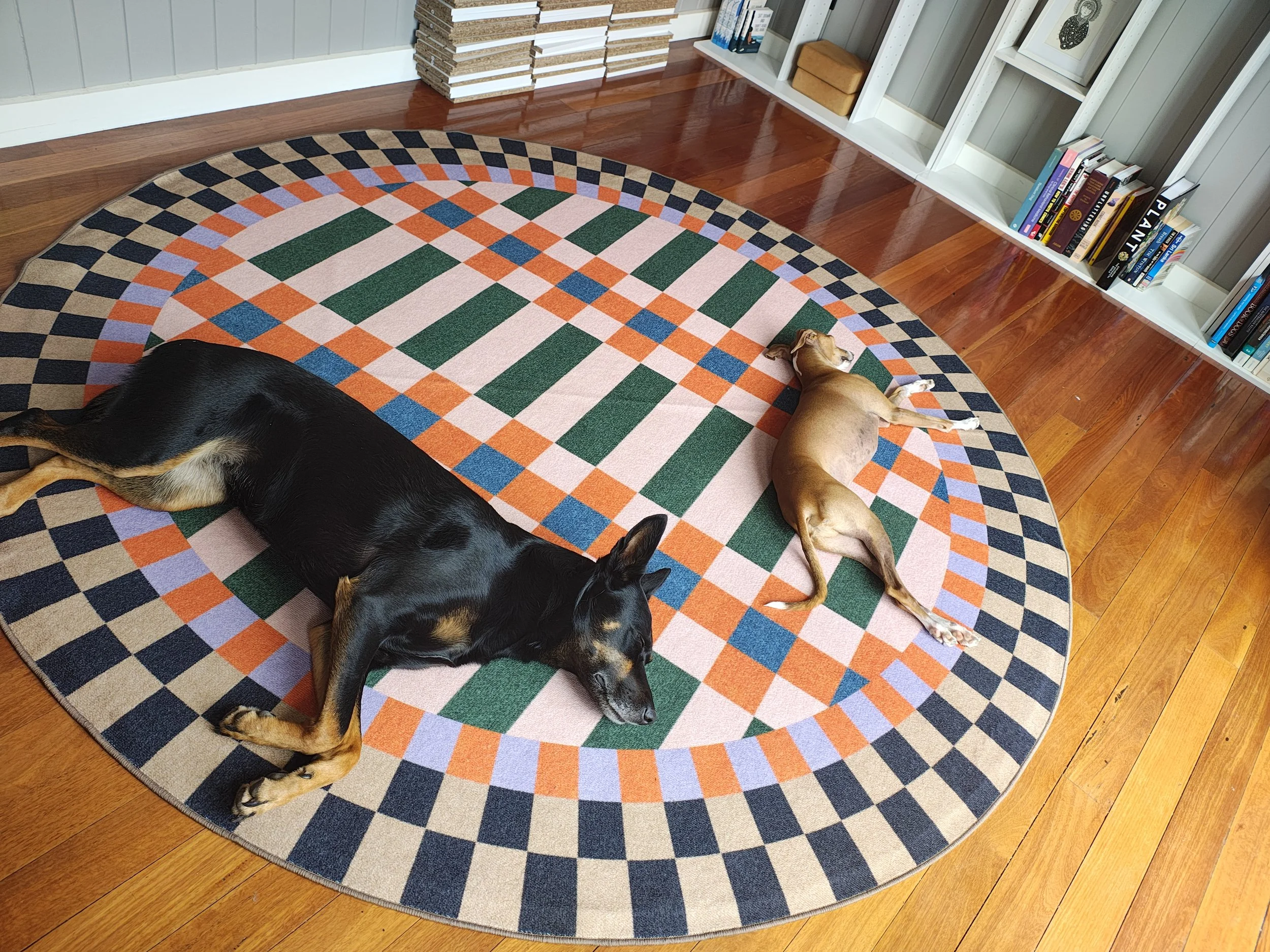
Adding a rug to the office has significantly increased how much time the dogs spend here, and how relaxed they are.
Can your dog truly rest?
Dogs are professional nappers. And unlike humans, who tend to sleep in a single long block, dogs are polyphasic sleepers. They rest many times throughout the day, often shifting locations depending on temperature, noise, light, or social proximity.
Which means a single dog bed tucked in the corner of the house rarely covers all their needs. The more options dogs have, the better they can regulate their own comfort.
In our house there are multiple sleeping options scattered around: a thicker bed in the living room, a soft mat in the office, an outdoor couch, a sunny patch near the glass door, and several enclosed “snuggle beds” our Italian greyhound loves to burrow into. They rotate between all of these throughout the day.
Part of what they’re doing is adjusting to the microclimates within the house. You might notice your own dog doing the same thing. Cool tiles in summer. A sunny window in winter. A shaded corner in the afternoon. Dogs move between these spaces to regulate their comfort.
Many dogs also enjoy being slightly elevated. A couch, armchair, or raised dog bed allows them to observe their surroundings while still resting. In a busy household, that small vantage point can help dogs feel more secure.
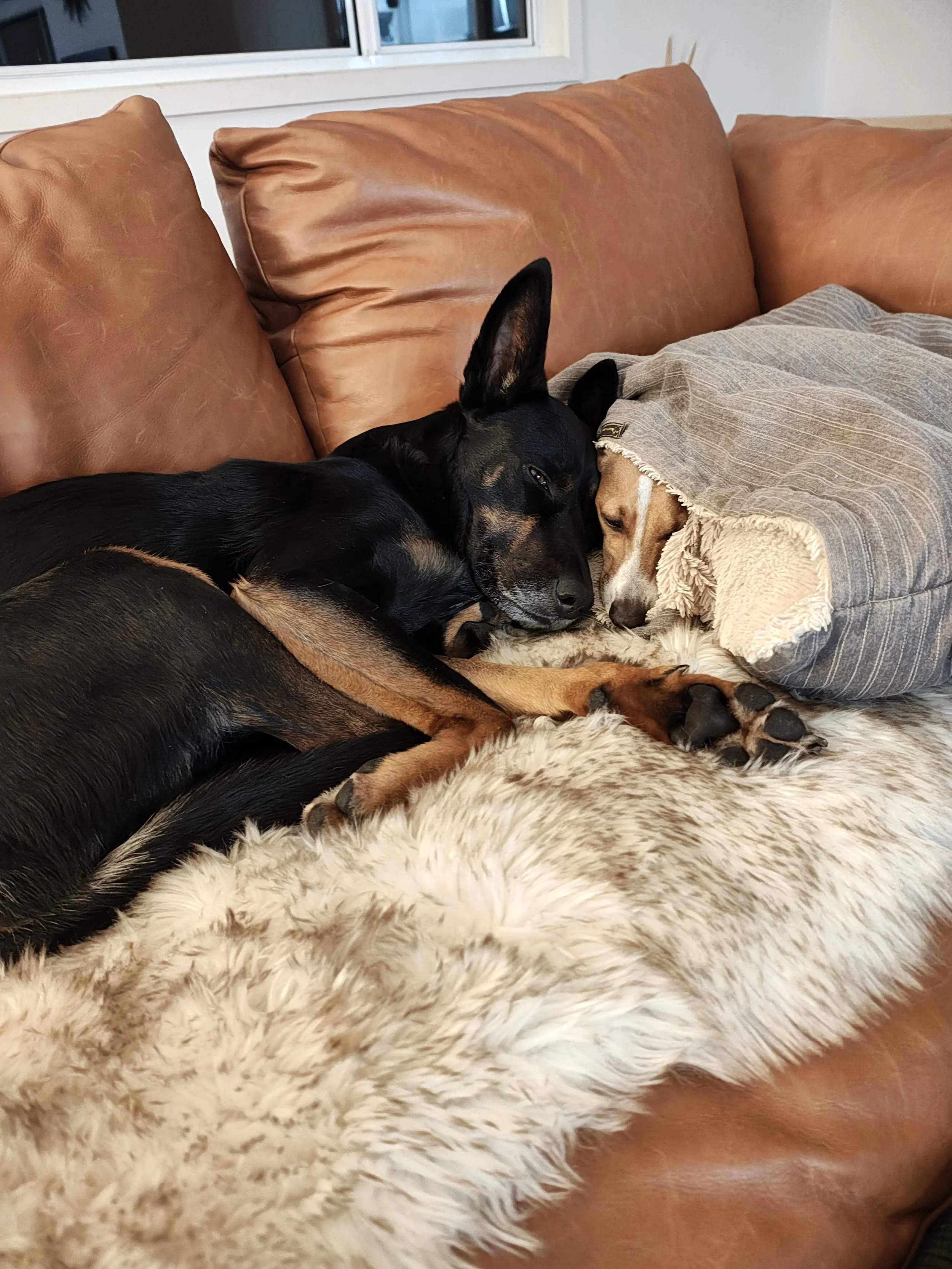
Dogs on furniture is a personal choice. Just know it’s more than okay if it works for your family!
What does your house smell like to a dog?
Dogs live in a scent-rich world that humans barely perceive. We often fill our homes with fragrances without thinking twice. Candles, diffusers, cleaning sprays, laundry detergents, air fresheners. Many of these smells may be overwhelming or unpleasant for our dogs, particularly if there isn’t a lot of air-flow.
Even well-intentioned habits can affect their experience of the home. For example, many people wash dog bedding frequently to keep things “fresh.” But bedding also holds familiar scents that help dogs feel settled. Stripping that scent away too often can remove a layer of comfort.
This doesn’t mean bedding should never be washed (some definitely should). But it’s worth remembering that from a dog’s perspective, a slightly “doggy” smell may actually be reassuring.
How loud is your home, really?
Human homes tend to hum (or sometimes screech…) with noise. Televisions. Music. Kitchen appliances. Lawn mowers.
Dogs hear at a much wider frequency range than we do, and sounds we barely register can feel intense to them. In our house, the biggest noise machine is currently two years old. Toddler joy is a beautiful thing, but it can also be… loud.
One solution has been creating a predictable quiet zone. Our guest room has gradually transformed into a dog retreat (apologies to future visitors; I promise we vacuum often). When things get loud, the dogs can disappear there without being followed or disturbed.
Soft furnishings also help absorb sound. Curtains, rugs, and fabric surfaces reduce echo and dampen noise in ways hard floors and bare walls don’t. Some people also find gentle background noise helpful when leaving dogs alone. Talkback radio, white/brown noise, or soft music can reduce the impact of sudden outside sounds.
Is your dog on neighbourhood watch?
Some dogs struggle to fully relax at home because they're fixated on monitoring what’s happening outside. If your dog spends a lot of time watching the street, barking at passers-by, or rushing the fence whenever another dog walks past, they may struggle to get proper rest at home.
Small changes can sometimes take a surprising amount of pressure off. Window film can reduce visual stimulation if the house looks onto a busy street or footpath (and you don’t have to sacrifice natural light). Solid or partially covered fencing can prevent constant fence-line patrols. In some cases, adding a secondary barrier a short distance inside the main fence can stop dogs from frantic sprinting when neighbouring dogs appear. The goal isn’t to shut dogs away from the world, but to create spaces where they don’t have to keep watch all the time.
Where might tension build in your home?
Another thing that becomes obvious once you start looking for it is how many small tension points exist in homes. Corners. Narrow hallways. Feeding spots tucked against walls. Places where a dog can end up trapped or surprised.
I feed my dogs in separate spaces, and avoid placing their bowls in tight spaces. If they have chews or puzzle toys, I make sure they can’t be easily approached or crowded by another dog or person. Small environmental tweaks can reduce the chance of conflict before it even begins. Despite one of my dogs being prone to resource guarding, we’ve (touch wood) never had an incident between them.
The same principle applies when children are part of the household. Dogs deserve spaces where they won’t be grabbed, touched unexpectedly, or interrupted while eating.
Baby gates, pens and physical boundaries can make life much easier for everyone. In our home, our toddler has an enclosed play area for times when we can’t fully supervise, and his high chair sits inside a small pen at dinner time. His bedroom has a baby gate so the dogs can wander past and have a look if they’re curious (a closed door can be very frustrating for some dogs), while still keeping his toys safe. Their feeding areas are behind closed doors he can’t open. It’s not exactly architectural digest material, but it works.
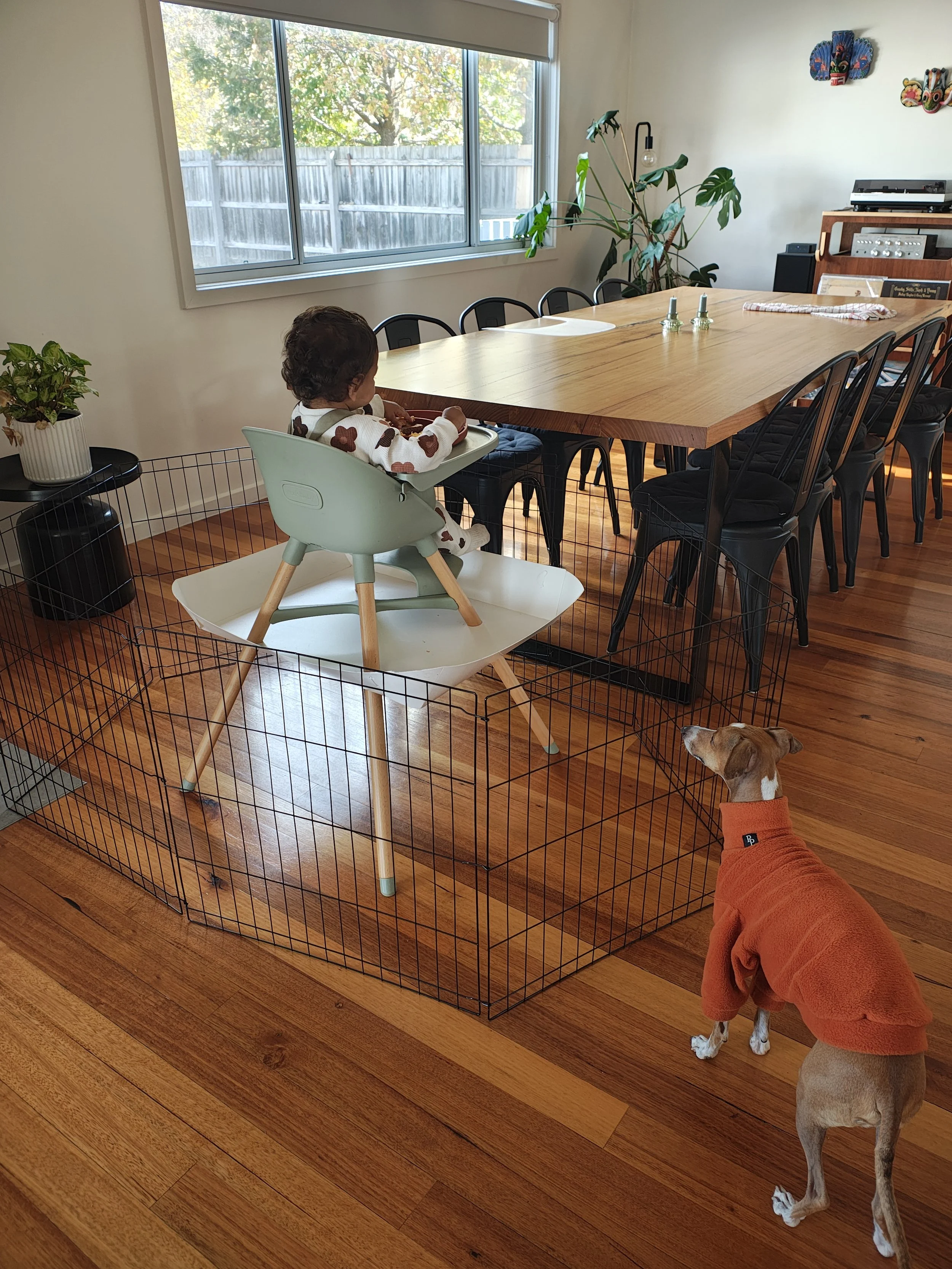
Highchairs can be a big point of tension and excitement for dogs (free food falling from the sky!). Management via pens and gates can make everyone’s life easier.
Comfort in a human made world
Most of these adjustments are small. But together they shape how dogs move, rest, eat, and recover in the spaces where they spend most of their lives.
Our homes are designed almost entirely around human bodies and human senses. When we make small shifts to include dogs’ needs as well, we often discover that comfort is surprisingly easy to improve.
Operation Slippery Floors may not be the most exciting home renovation I’ve ever undertaken. But judging by the confident galloping now happening across the hallway rug, it might be one of the most appreciated.
