
Who bears the cost of coexistence? Dogs, dingoes and shared worlds
In the last edition of Between Species, I explored the relationship between care and harm, and how these concepts often have blurred lines. Since then, events have unfolded around the world that seem to perfectly illustrate this tension.
Like so many people, I feel rattled by today’s political landscape and find myself desperately trying to make sense of it all. My focus is often on non-human animals, but the human element is never absent. They’re inextricably linked. Caring about animals is not, for me, a retreat from political reality. It’s not a softer or less confronting concern. These ‘animal enquiries’ sit alongside racism, sexism, homophobia, ableism, speciesism, and questions of privilege (including my own), and I try to hold these threads together, albeit imperfectly.
On K’gari, the World Heritage listed island off the coast of Queensland, 19-year-old Canadian backpacker Piper James tragically died after being found on a beach early one morning surrounded by dingoes. In the days that followed, several dingoes linked to the incident were euthanised as potential public safety risks, prompting widespread debate about wildlife management, tourism, Indigenous consultation, and coexistence.
In India, colleagues I deeply respect, people who work day in and day out alongside free-living dogs and the communities that share space with them, are grappling with escalating political pressure that is leading to large-scale displacement, relocation, and in some cases killing of street dogs.
And in the UK, where I spent much of my career, the consequences of the XL Bully ban continue to ripple outward, affecting not only dogs but families, shelters, veterinarians, trainers, and councils, while reopening older debates about breed bans and how risk is defined and managed. Australia, of course, has its own history with breed-specific legislation, often enforced unevenly and with outcomes that are confusing at best and deeply distressing at worst.
Different contexts, familiar tensions
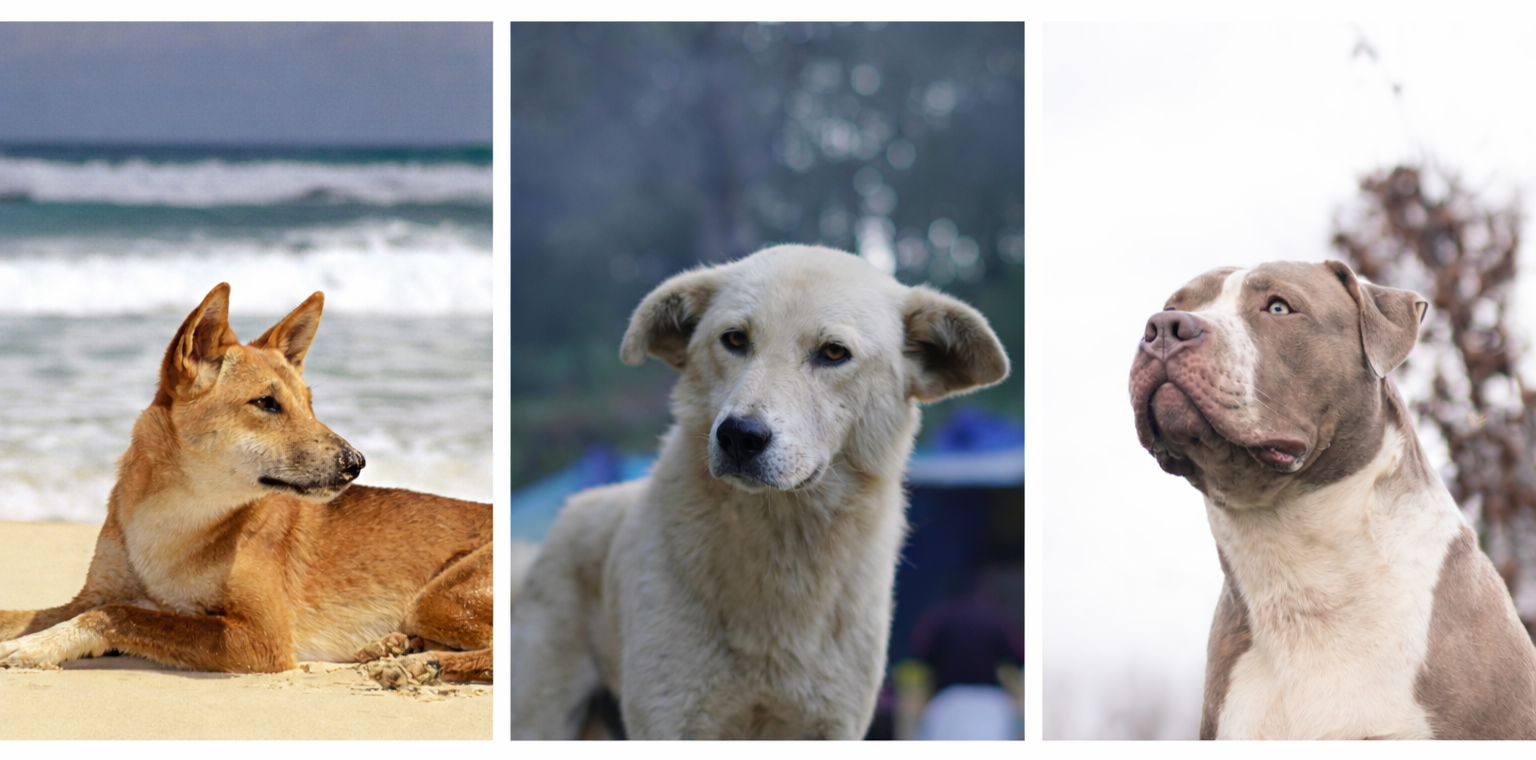
Obviously, these situations are not the same. Dingoes live within landscapes shaped by conservation and tourism. Street dogs often live in dense urban environments, navigating neighbourhoods, markets, and streets thick with traffic, neither wild nor owned in the way Western pet culture understands. XL Bullies (and other breeds affected by bans) are companions, raised inside homes and regulated through legislation that reaches directly into domestic life. Each context has its own history, culture, politics, and stakes.
What links them is not the surface detail but the pattern underneath. Repeatedly, dogs are asked to live inside human systems that were never designed with them in mind. When those systems strain or fail, the spotlight turns quickly towards the dogs themselves.
Working with people and dogs has taught me that behaviour is linked to context. You can’t understand a dog without understanding the environment they live in, the expectations placed on them, the stress they carry, and the histories that shape them. Yet at a societal level, we routinely abandon this way of thinking. Instead of asking how our infrastructure, policies, economies, and cultures create predictable pressure points, we collapse complexity into simple stories. Dingoes are cast as dangerous, street dogs as a nuisance, and specific breeds as a threat. We pay much less attention to the systems that produced these labels in the first place.
Making the problems dog-shaped
Canids (dogs and their wild relatives, including dingoes) don’t choose the worlds they are born into. Dingoes didn’t design tourism economies, visitor behaviour, food rules, or enforcement capacity. Street dogs didn’t design waste management systems, vaccination infrastructure, or the political realities that shape how welfare programs are funded and implemented. XL Bullies didn’t design breed trends, housing density, or the social and economic conditions that influence who buys which dogs and how they are supported.
And yet dogs are routinely treated as independent moral actors, responsible for navigating worlds that humans have constructed. We often forget that all animals are situated beings. They’re shaped by the landscapes, relationships, and institutions they’re part of. Their behaviour reflects those conditions, whether we find that reflection comfortable or not.
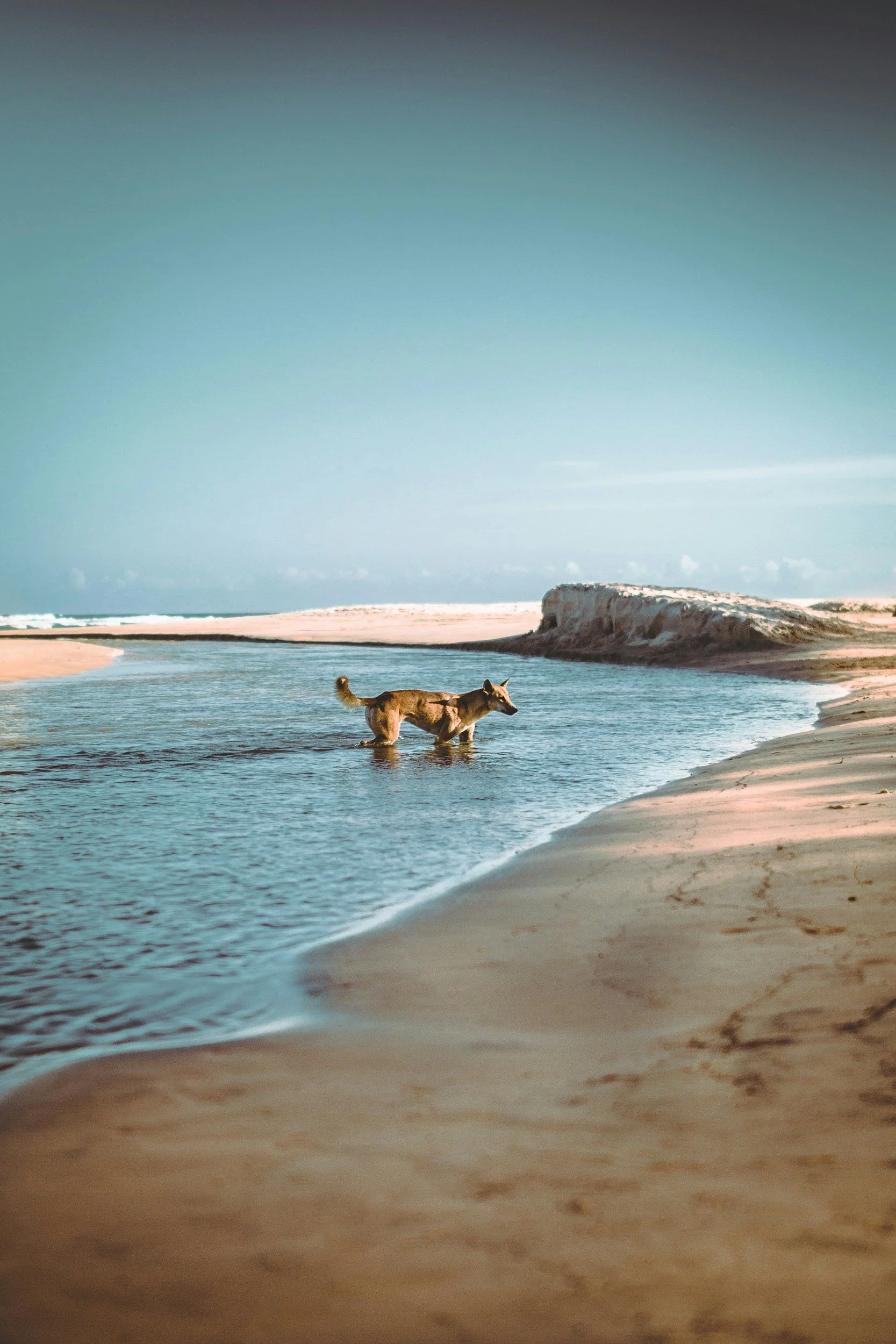
Dingoes have been part of Australian ecosystems for thousands of years, far longer than the systems now governing their lives.
Living within human systems
The spaces non-human animals inhabit carry expectations about who they “should” be. In places framed as “wild,” they are expected to keep their distance and perform a kind of acceptable wildness, available for admiration and photography, while still regulating themselves in ways that keep humans safe. Dingoes on K’gari are expected to embody this wildness while living inside a highly managed tourism environment filled with people, food, and rules they don’t understand.
In public, shared spaces, dogs are expected to exist without interrupting daily life. Street dogs are tolerated as long as they fade politely into the background when needed, don’t bark too much, don’t bite, and don’t interfere with the image a city is trying to project, particularly when political attention or major events are involved.
In domestic settings, dogs are expected to be safe, predictable, emotionally compatible, and compliant. Companion dogs are meant to slot neatly into family life and neighbourhoods, ideally without challenging anyone’s sense of security.
Conflict tends to emerge when dogs fall outside these narrow definitions of acceptability. I don’t see this as a failing on the part of the non-human animals. Rather, it reflects how little room our frameworks leave for species-typical behaviour, environmental stress, and social complexity.
Dogs and moral panics
When serious harm occurs (and it does) public discourse often contracts rapidly. There is enormous pressure for answers, especially in the face of grave and devastating incidents such as injury and death. What tends to follow is a familiar narrowing of focus.
Tourism design, food conditioning, and governance failures fade into the background, replaced by narratives about “dangerous wild animals”. Urban infrastructure, inconsistent vaccination programs, and long-term population management challenges become the “stray dog problem”. Breeding practices, regulation gaps, and social inequality dissolve into “dangerous breeds”.
When something goes wrong, complex situations often get reduced to a single cause, and blame gets placed on whatever feels most visible in that moment. Social scientists sometimes describe this kind of collapse as moral compression, and sociologists have long observed similar patterns through the idea of moral panic. In these case studies, dingoes and dogs become the visible embodiment of much larger structural issues. This allows fear, grief, and uncertainty to be channelled toward a single target. And once that happens, solutions can look deceptively simple.
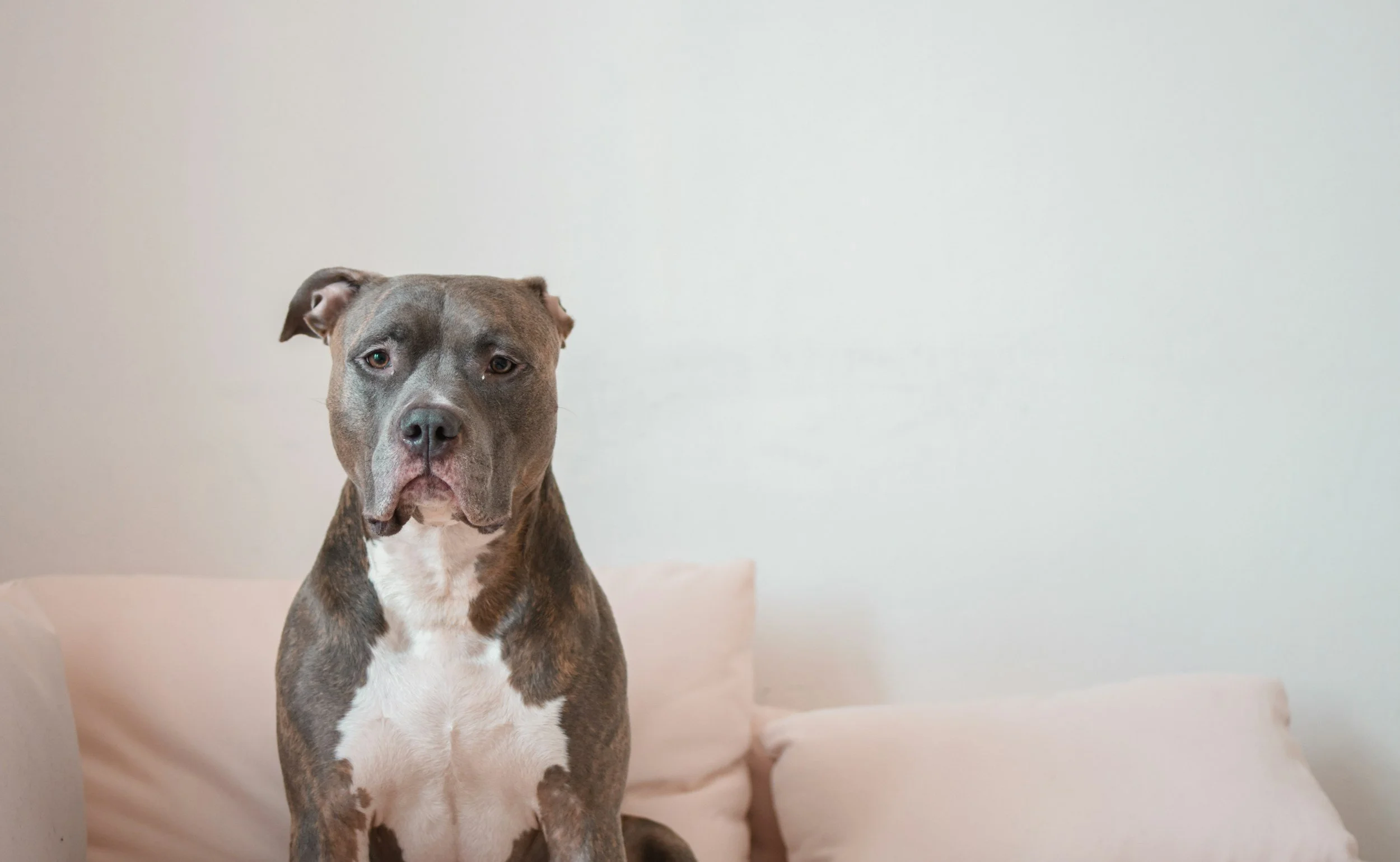
The “XL Bully” isn’t a specific breed but an appearance-based label, which can make identification and enforcement subjective and inconsistent.
Overlooking the evidence
Measures like culling, displacement, or breed bans offer a sense of containment and control. They create the impression that risk has been brought back into line. By comparison, the work of redesigning systems is slower and less immediately satisfying. It involves things like waste management, breeding regulation, vaccination programs, social justice, education, and sustained funding. It requires coordination across organisations and communities, and it doesn’t fit neatly into news cycles or political timelines.
So again and again, we gravitate toward interventions that act on non-human animals, rather than toward the harder task of reshaping the conditions that place dogs and humans in conflict.
On K’gari, Indigenous knowledge about dingoes and Country is routinely overlooked. Butchulla people have lived alongside wongari (dingoes) for thousands of years. Indigenous rangers and Traditional Owners continue to call for education, visitor behaviour change, food management, and shared responsibility instead of reactive killing. This reframes conflict as a governance issue rather than an animal one, and points to models of coexistence that already exist.
Scientific research highlights similar themes. In large carnivore management, reviews of decades of research show that lethal control has limited evidence for producing lasting reductions in conflict, particularly when social structures are disrupted and the underlying drivers of encounters remain unchanged. In free-living dog populations, public health literature consistently points to sustained vaccination and sterilisation, combined with community engagement, as the most effective way to reduce rabies risk and stabilise populations. Periodic removal doesn’t achieve this. And in the realm of breed-specific legislation, multiple studies have failed to find consistent evidence that banning particular breeds reduces dog bite injuries at a population level. Risk is shaped far more by management, human behaviour, socioeconomic context, and access to education and veterinary care.
When we step back from the urgency of the moment, the evidence keeps pointing in the same direction. Acting on dogs (rather than for) without addressing systems rarely delivers the outcomes people hope for.
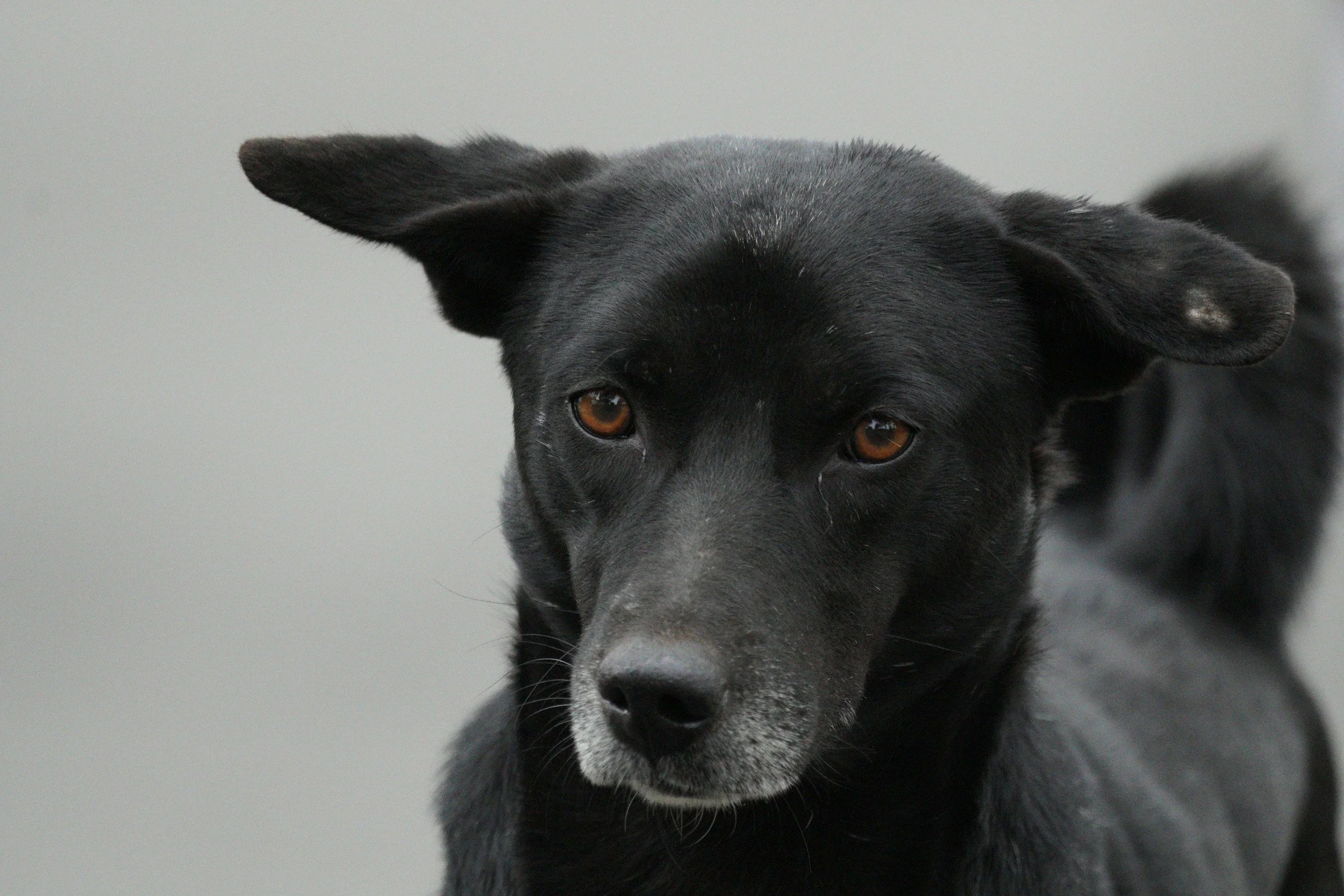
Most dogs globally are free-ranging, not pets, which makes community-based care and public health systems central to their welfare.
Risk, reality, and hope
People being injured by dogs or wildlife is serious and real, and I have deep compassion for families who lose loved ones in this way. I lost a sibling who was only a few years older than Piper James, and while I would never claim to understand how her family feels, I do know something of how disorienting and consuming that kind of traumatic grief can be. I can’t imagine what it would be like to carry that loss so publicly, under the weight of media attention and political responses. There’s no analysis or action that softens that kind of pain.
Fatal incidents involving dogs or wildlife are devastating, but they’re also statistically rare. The vast majority of canids will never seriously harm a human. Most dog bites, when they do occur, are minor and involve familiar dogs in familiar settings. The risks most likely to harm or kill us come from far more ordinary sources: cars, interpersonal violence, workplace accidents, chronic disease. Naming this isn’t about diminishing tragedy. It’s about recognising that our sense of danger is not always aligned with where harm most commonly arises.
This mismatch matters because it shapes policy. It determines what we fund, what we regulate, and whose lives are treated as expendable when fear is high. If we’re serious about reducing harm, then the work has to happen upstream. It requires a shift from reaction to prevention, from managing dogs to redesigning the systems they live in. It also asks us to have a more honest relationship with uncertainty. Living alongside other species will always involve unpredictability. There will always be tension between safety, livelihoods, conservation, and care. Coexistence is ongoing work.
I don’t have clear answers for these tensions. But I'm increasingly certain that asking dogs to carry the weight of our system failures is neither fair nor effective. If we want something different, we have to accept the fact that the conflicts we see are not anomalies. They’re reflections.
The question is whether we are willing to rethink our world with other species truly in mind.
Learn more or support
If you’d like to learn more, or support organisations working toward more humane and effective approaches to coexistence, here are a few starting points.
Defend The Wild - advocates for Australia’s wildlife and ecosystems, promoting non-lethal management of apex predators like dingoes, ethical conservation practice, and meaningful involvement of Traditional Owners in governance
Australian Dingo Foundation - research, education, and protection of dingoes and their ecological role
Butchulla Aboriginal Corporation RNTBC - the registered native title body corporate for the Butchulla people, custodians of K’gari, working to protect cultural and natural values and advocate for community-led approaches to coexistence
BHARCS - an Indian canine behaviour and education academy advocating humane, evidence-based approaches to street dog coexistence, including vaccination, sterilisation, and community engagement
Stray Buddy - supports neighbourhood groups to humanely manage street dog populations through vaccination, sterilisation, community tools and awareness-raising
FIAPO - an Indian animal protection coalition advocating for humane policy, community welfare, and systemic approaches to coexistence, including street dog management
Dogs Trust - research, rehoming, and policy advocacy around breed-specific legislation and dog welfare
RSPCA - practical support for affected guardians and dogs, plus long-standing opposition to breed bans.
Battersea Dogs & Cats Home - frontline rehoming and public education, including work with dogs impacted by legislation.
References
Cohen, S. (1972) Folk Devils and Moral Panics: The creation of the Mods and Rockers. New edition. London ; New York: Routledge.
Duncan-Sutherland, N. et al. (2022) “Systematic review of dog bite prevention strategies,” Injury prevention, 28(3), pp. 288–297.
Eklund, A. et al. (2017) “Limited evidence on the effectiveness of interventions to reduce livestock predation by large carnivores,” Scientific Reports, 7(1).
Letnic, M., Ritchie, E.G. and Dickman, C.R. (2012) “Top predators as biodiversity regulators: the dingo Canis lupus dingo as a case study,” Biological reviews of the Cambridge Philosophical Society, 87(2), pp. 390–413.
Morters, M.K. et al. (2014) “Demography of free‐roaming dog populations and applications to disease and population control,” The Journal of Applied Ecology, 51(4), pp. 1096–1106.
Ripple, W.J. et al. (2014) “Status and Ecological Effects of the World’s Largest Carnivores,” Science (American Association for the Advancement of Science), 343(6167).
Wallach, A.D. et al. (2009) “More than Mere Numbers: The Impact of Lethal Control on the Social Stability of a Top-Order Predator,” PloS one, 4(9).
Weir, C. (2024) “Dangerous Dogs: An analysis of the Dangerous Dogs Act 1991 and Breed-Specific Legislation. Are We Barking up the Wrong Tree?,” Journal of criminal law (Hertford), 88(5–6), pp. 347–357.
