

Whose safety counts? Dogs, snakes, and the ethics of training
Before we begin
This is an in-depth, reflective piece that pulls together ethics, dog training, and living alongside wildlife, specifically snakes. If you like knowing where you’re headed before you dive in, here are the main threads I’m weaving together:
Care and harm are not always opposites. In relationships shaped by power, including those we have with animals, they can become entangled.
The concept of “violent care” helps describe situations where harm is carried out in the name of protection, responsibility, or compassion.
In dog training, this often shows up as “pain now to prevent problems later”, particularly through aversive methods.
Snake safety training offers a clear example of how these ethical tensions play out across species, not just for dogs but for snakes as well.
Asking whose safety counts invites us to look beyond outcomes alone, and to consider cost, power, and whose bodies absorb risk.
Gentler, non-aversive approaches may ask more of us, but they offer ways forward that are both effective and ethically easier to live with.
I’m glad you’re here. Let’s get into it!

Love is complex, and nothing illustrates this quite like the intersection of care and harm
Care and violence are often seen as sitting at opposite ends of a moral spectrum. Care is what we do to protect, support, and reduce suffering. Violence is what we try to avoid, condemn, or justify only in the most extreme circumstances. When we care deeply for another, regardless of species, harm shouldn’t be part of the picture.
But that assumption doesn’t hold up when we look closely at how care operates in real relationships. During a recent discussion in my anthrozoology studies, I was prompted to sit with a less comfortable reality: that care and violence can be intertwined, especially in relationships shaped by uneven power, such as those we have with our dogs.
This complex entanglement is sometimes described using the term violent care.
What do we mean by “violent care”?
Within animal studies and environmental humanities, scholars such as Thom van Dooren and Kendra Coulter use the term violent care to describe situations where harm is carried out in the name of protection, responsibility, or compassion. Here, violence doesn’t refer only to overt brutality, but also to practices that induce pain, fear, or distress, restrict freedom or agency, or expose bodies to harm or threat. The focus is not on intent, but on effect: what is done to a body, even when it is done with care and good intentions.
Violent care often appears when people are trying to act responsibly in high-stakes situations. Euthanasia chosen to relieve suffering is one familiar example. Veterinary medicine is another, where invasive procedures and painful treatments may be necessary to prevent greater harm, even as they involve significant physical impact on an animal’s body.
Similar tensions appear in practices such as culls, often directed at introduced species in an effort to protect ecosystems and threatened native animals. They’re also present in biomedical research, where animals may be exposed to stress or bodily intervention in the pursuit of medical knowledge to benefit humans. Harm is not the goal, but becomes the means through which care is enacted.
The sticky question is not whether violence can ever be justified, but how easily it becomes normalised. When harm is framed as care, it becomes more difficult to question and challenge. Understanding violent care helps us pay closer attention to how power operates: who gets to decide what harm is considered necessary, which bodies are expected to absorb that harm, and whose suffering is treated as an acceptable cost.
Violent care in dog training
In dog training, violent care often appears as a trade-off: pain now to prevent problems later. Shock collars, corrections, intimidation, and flooding are framed not as cruelty, but as care under pressure. Gentler and more positive methods are often dismissed as soft, slow, or ineffective, despite evidence to the contrary from research and the lived experiences of guardians and trainers.
Aversive methods are also commonly justified as a way to prevent relinquishment or euthanasia, implying that immediate harm is preferable to a more final one. Seen through the lens of violent care, this framing is ethically fragile. It shifts the conversation toward whether a method “works” quickly enough, but sidelines harder questions about cost, harm, and power. On social media, this often collapses into explosive debates about effectiveness, as if outcomes alone are all that matter.
In my opinion the more interesting and ethically important questions lie elsewhere. Not simply does it work, but at what cost, to whom, and under what assumptions about control, fear, and responsibility? When gentler methods are written off as naïve or indulgent, violence begins to masquerade as realism, and care is reduced to whatever produces the fastest compliance and the greatest immediate relief for humans.
Snake safety training as a working example
A tangible example of these ideas can be seen in snake safety training for dogs. I live and work in Australia, where highly venomous snakes are a genuine hazard. Around 85% of the world’s most venomous snake species are found here. Dogs, with their curiosity and impressive commitment to sticking their faces into long grass and mysterious holes, are not an ideal match for dangerous reptiles. Snake bites can be fatal, and I’ve spoken with many guardians who have been devastated by losing a dog this way.
This is exactly the kind of situation where violent care becomes very persuasive. Snake avoidance training is often framed as a moral imperative. And the majority of training approaches rely on aversive tools (usually shock collars) to create fear-based avoidance in dogs. They also tend to use live snakes, which may be handled, confined, transported, and repeatedly exposed to dogs during training sessions. These practices are typically justified as necessary, effective, and life-saving.
Whose welfare counts?
I work primarily with dogs, but I’ve always been fascinated by animals more generally, which has made me increasingly aware of how speciesism shapes the way I think and work.
Speciesism is the belief that some species (typically humans) are inherently more valuable than others, and that this difference justifies unequal treatment. It often operates through proximity and familiarity. Animals who live closely alongside us or whose emotions feel readable are more easily granted moral concern.
Dogs are generally (although not always) regarded as worthy of care and protection. They share our homes and interact with us in ways that feel emotionally fulfilling. We tend to recognise them as individuals with personalities, histories, and roles. They are often perceived as family members, and as friends.
Snakes, by contrast, are culturally framed as dangerous and referred to via categories: brown, tiger, deadly. Their crucial ecological role, which involves controlling rodent populations and contributing to healthy ecosystems, is frequently overlooked. When I was growing up (and even now), the idea that “the only good snake is a dead snake” was a common refrain in Australian culture. This persists even though snakebite deaths are rare, and when you look at broader patterns over decades, more human fatalities in Australia have actually involved dogs than venomous snakes.
I don’t exempt myself from this type of thinking. I find it much easier to care about dogs than snakes. My fear of snakes is real, and my love and concern for my dogs is visceral. My studies have pushed me to question how fear and familiarity shape my ethics: they may explain our instincts, but they don’t justify the hierarchies we build from them.
The snake’s point of view
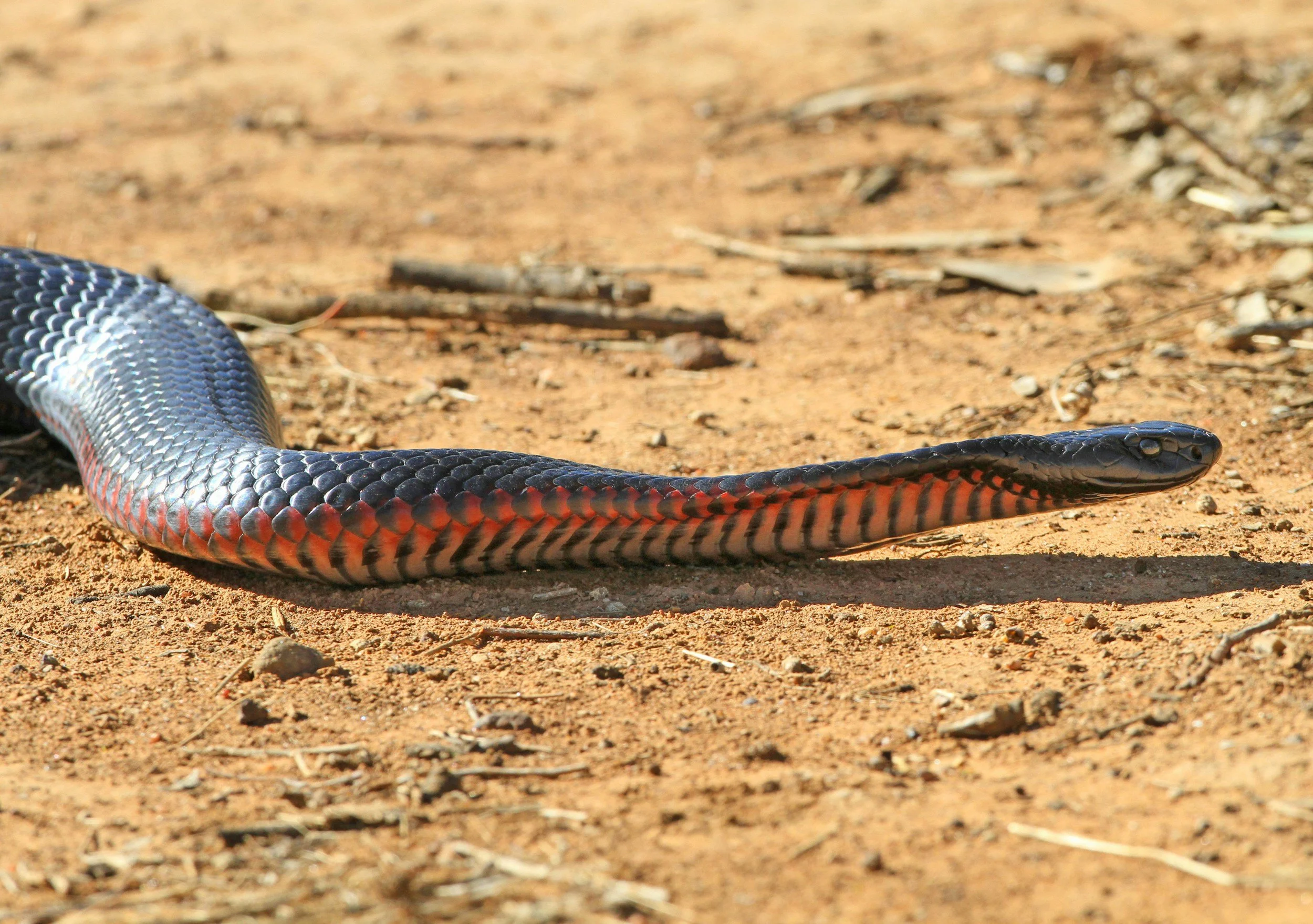
It is all too easy to reduce snakes to “things” and discount their inner world and experiences
If we genuinely want to question our assumptions and biases, one place to start is by learning more about the animals we fear and feel least connected to. I became a licensed Un-Chase Snakes! trainer because I wanted to protect my own dogs and the dogs of my clients. That motivation hasn’t changed. What has shifted, through my studies and my work, is a growing sense that “snake safety” training should treat snakes as more than props, and acknowledge their role as responsive participants in these encounters.
A common assumption is that snakes don’t have much going on emotionally or cognitively. They are often seen as instinct-driven, simple, and largely indifferent to stress. However, work in reptile welfare and behavioural ecology shows that snakes are highly sensitive to environmental change. Handling, confinement, transport, and exposure to perceived threats all induce measurable stress responses. These responses are detectable physiologically, including through changes in glucocorticoid hormones measured in blood, faeces, and even shed skin.
Crucially, reptiles express stress in ways humans are not good at recognising. Freezing, stillness, and reduced movement are common stress responses in snakes, but these behaviours are easily misread as calm compliance. Warwick and colleagues have repeatedly pointed out that this mismatch between reptile behaviour and human expectations leads to chronic under-recognition of reptile suffering.
There is also research on predation risk showing that exposure to predators, or even predator cues, alters behaviour and increases physiological stress, even when no physical injury occurs. From this perspective, repeatedly exposing a confined snake to a dog is unlikely to be neutral or benign, even in the absence of physical harm.
Another practice that deserves closer examination is the de-venomisation of snakes, sometimes suggested as a way to make training or educational encounters safer. In these contexts, “safe” is used to mean incapable of delivering venom. From a broader welfare and risk perspective, however, this framing is incomplete. Venom glands can regenerate, bites can still cause injury, and the stress associated with repeated handling and restraint remains. De-venomisation doesn’t remove risk so much as redefine it, while leaving the snake’s experience largely unexamined.
None of this means that snakes experience the world in the same way dogs do, or that their inner lives are identical to those of mammals. But it does mean that assumptions about their indifference and resilience are not always evidence-based.
It’s also worth acknowledging that the harm in dog-snake interactions impacts both species. While dogs are sometimes injured or killed by snakes, snakes are also injured and killed by dogs in large numbers each year. In many cases, this happens when snakes are simply moving through their habitat or seeking shelter in environments increasingly impacted by humans and their companion animals.
Asking what care might look like from the snake’s point of view doesn’t require us to minimise danger or abandon responsibility toward dogs. It asks that we resist the urge to treat certain lives as disposable simply because they are unfamiliar, frightening, or inconvenient.
Care without shortcuts
Snake safety approaches offer an important opportunity to consider dog training from a multispecies viewpoint. If alternatives exist that avoid fear, pain, and the instrumental use of live animals altogether, it’s worth asking why we wouldn’t explore them.
The reality is that gentler approaches sometimes ask more of us. Force-free snake safety training usually requires sustained engagement rather than a weekend workshop. It asks guardians to practise skills, build reinforcement histories, and tolerate some uncertainty. It doesn’t promise instant results or offer the illusion of control that fear-based methods sometimes do.
What it does offer are outcomes that are both effective and ethically easier to live with. As more trainers and guardians experiment with positive, non-aversive approaches, the results being shared are extremely promising: dogs learning reliable disengagement behaviours, reduced risk during real-world encounters, and a noticeable absence of fallout associated with aversive training. Just as importantly, these methods avoid placing dogs or snakes in situations that may terrify them.
The future I’d love to see is one where snake safety training is supported by more comprehensive and transparent research. Not research designed to settle training method debates, but research that helps us understand what keeps everyone safer. That kind of work has the potential to shift this discussion from ideology to enquiry.
There are already people helping to move the field in this direction. Trainers and educators such as Ken Ramirez (Executive Vice President and Chief Training Officer at Karen Pryor Clicker Training) and Alexis Davison (founder of Un-Chase!) have been instrumental in showing that snake safety doesn’t have to rely on fear or force to be taken seriously. Their work doesn’t deny risk; it simply refuses the idea that violence is the only reasonable response to it.
Living alongside dogs (and snakes) requires more than good intentions. It asks us to hold complexity, stay ethically awake, and take responsibility not only for who we protect, but for the kinds of harm we are willing to accept and normalise along the way.
References
Bielli, M. & Silvetti, S. (2014) ‘Venomoid surgery in venomous snakes: surgical technique and follow up’, Journal of Herpetological Medicine and Surgery, 24(1–2), pp.43–47.
Clinchy, M., Sheriff, M.J. and Zanette, L.Y. (2013) ‘Predator-induced stress and the ecology of fear’, Functional ecology, 27(1), pp. 56–65.
Coulter, K. (2016) ‘Beyond Human to Humane: A Multispecies Analysis of Care Work, Its Repression, and Its Potential’, Studies in social justice, 10(2), pp. 199–219.
Mellor, D. and Beausoleil, N. (2015) ‘Extending the “Five Domains” model for animal welfare assessment to incorporate positive welfare states’, Animal welfare, 24(3), pp. 241–253.
O'Shea MBE, M. (2004) ‘The case against venomoid snakes,’ The Herptile.
van Dooren, T. (2014) ‘Care’, Environmental humanities, 5(1), pp. 291–294.
Warwick, C. et al. (2013) ‘Assessing reptile welfare using behavioural criteria’, In practice (London 1979), 35(3), pp. 123–131.
Wemelsfelder (2007) ‘How animals communicate quality of life: the qualitative assessment of behaviour’, Animal welfare, 16(2), pp. 25–31.
