
Are our dogs socially fulfilled, or just socially exposed?
What two days away revealed about dog friendship
Last week, I went away for two nights with a close friend and our dogs. We stayed in a wonderfully dog-friendly cottage tucked into bushland, and spent each morning drinking coffee on the verandah as the sun crept up through the trees. Ferns stirred in the breeze and birdsong cut through the quiet. Before long, the king parrots and rosellas arrived, cocking their heads and carrying on until we gave in and got out the bird seed.
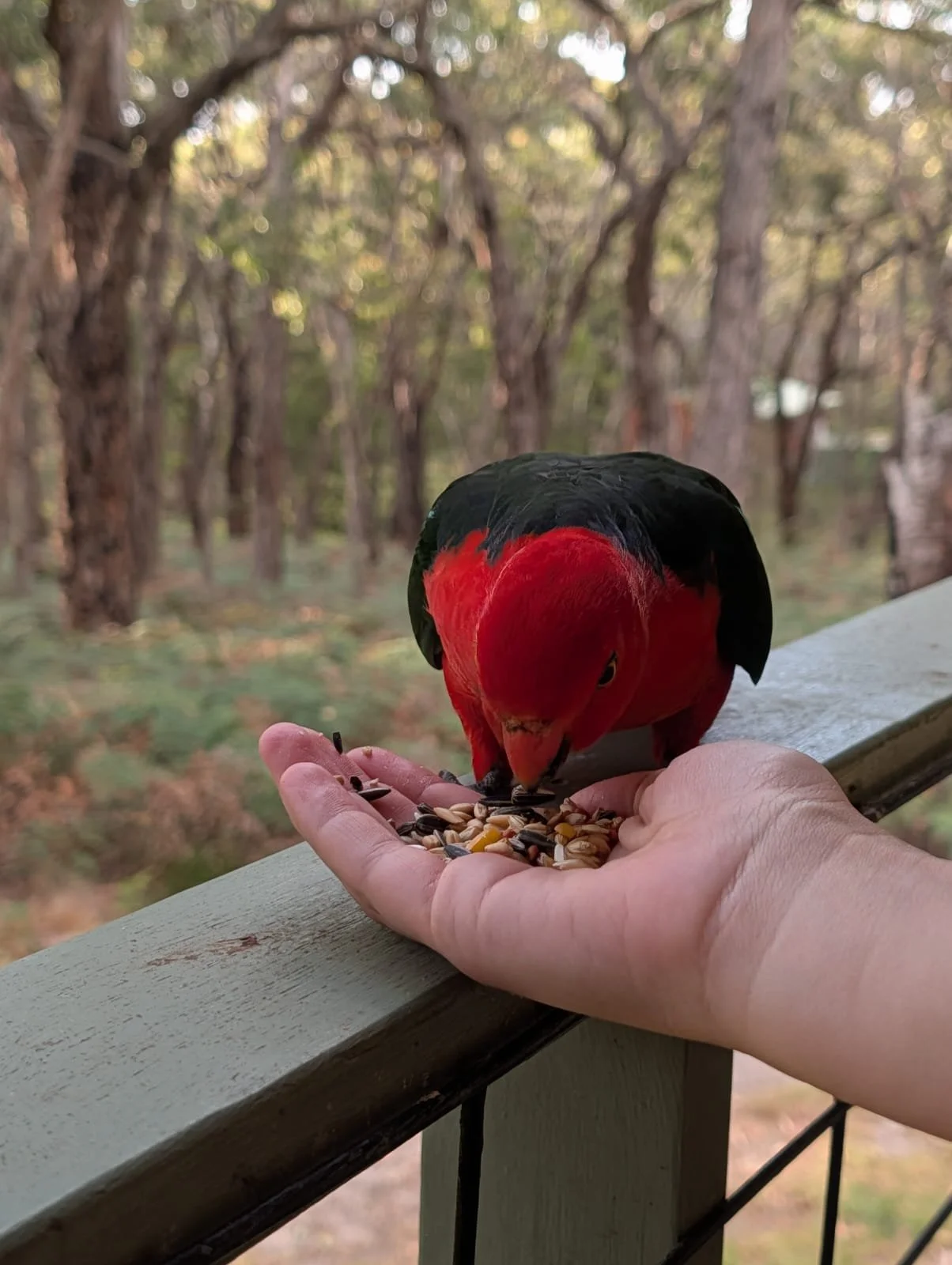
A friendly local visitor
Our dogs meet and play regularly, so they’re familiar friends. But this was the first time they’d shared space for days at a time, rather than hours.
On the human side, it was the kind of trip that reminds you why time together matters. We savoured time at the beach, meandering conversations, fits of laughter, board games, good food, and wine. The dogs did their version of the same. They sprinted and wrestled, tore around the yard at full speed, inspected every patch of ground, then eventually collapsed into that loose-limbed, sand-dusted sleep that makes you think, “OK, you’re having a pretty good life.”
But the bit that stuck with me wasn’t just that everyone had fun. It was what evolved over those two days. At first, the dogs were…a lot. Excited, noisy, very into each other, very into the new place. Then, slowly, they figured it out. They played, but they also learned to just exist together. They started settling in the same room. They got better at pausing. They even managed to chill in the car without acting like the backseat was a wrestling ring.
It made me think about something we don't focus on enough in the dog world: dog friendships. Not “my dog said hi to a random dog in the park for twelve seconds”, but real relationships that have time to develop.
Social encounters aren’t the same as social relationships
A lot of dogs’ social lives are built from fragments, such as quick greetings on lead or a chaotic few minutes of play before someone leaves, someone growls, or a human steps in with, “OK, OK, that’s enough.”
For many dogs these short, high-arousal interactions don’t actually result in what we might call “social wellbeing.” They are exposure rather than relationships. Relationships need repetition and familiarity. A chance to learn each other’s patterns, preferences and boundaries. In other social mammals, we know that the presence of a familiar companion can reduce stress responses, a phenomenon researchers call social buffering. The basic idea is simple: it’s easier to cope with the world when you’re not doing it alone.
Dogs are incredibly social animals, even if the modern pet dog lifestyle is sometimes quite solitary. But it’s not just the presence of other dogs that matters, it’s also the quality of their relationships. In studies looking at dogs (and wolves) living alongside others, individuals showed stronger stress-buffering effects when they had close, affiliative relationships. In simple terms - who you're with matters.
This played out during our trip away. Our dogs aren’t just “dogs near dogs.” They’re friends, and over a couple of days, they got even better at being friends.
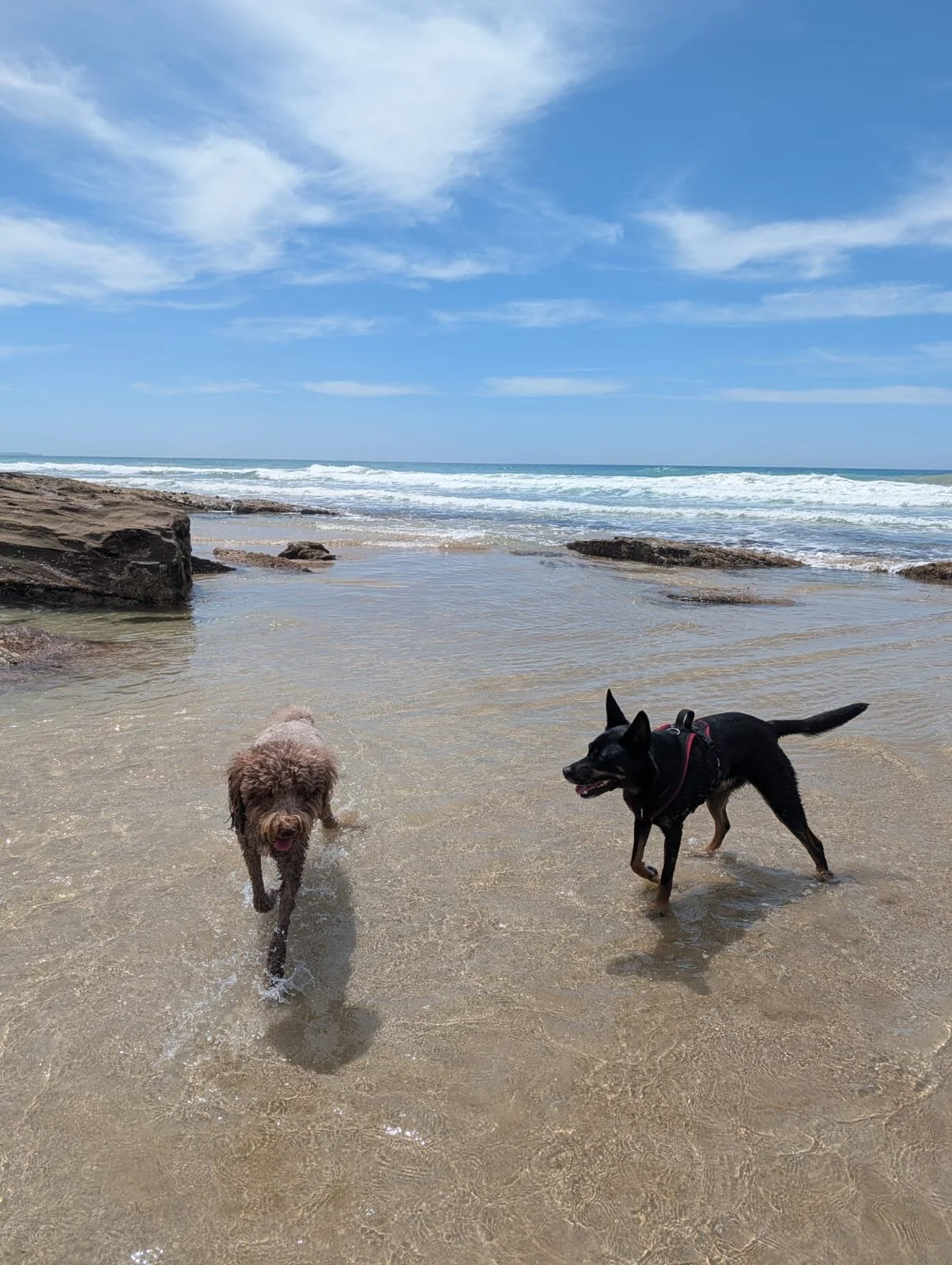
Ollie and Zelda in their absolute element
Giving dogs space to learn
A big reason this trip worked was that we weren’t trying to manage every second of it.
Not because we switched off, but because we trusted the setup, and our dogs. We supervised, built in breaks, paid attention to body language, and stepped in when needed. But we also allowed the dogs to live alongside each other, rather than trying to choreograph every interaction. We didn’t expect instant calm and harmony. We let excitement rise and fall, and we let familiarity do its slow, boring, and quietly miraculous work.
Social skills aren’t learned in a single, perfect moment. They’re shaped over time, through experience. Through small exchanges that repeat and grow: “When you do that, I move away.” “When you pause, I re-engage.” “When you’re too much, I’m done.” “When we’ve played, we can also lie down.”
Play itself serves important social functions for dogs, including social cohesion and relationship maintenance, not just burning energy. But play stays healthy only when it’s balanced with the other half of social life: resting, sharing space, and learning how to just be together.
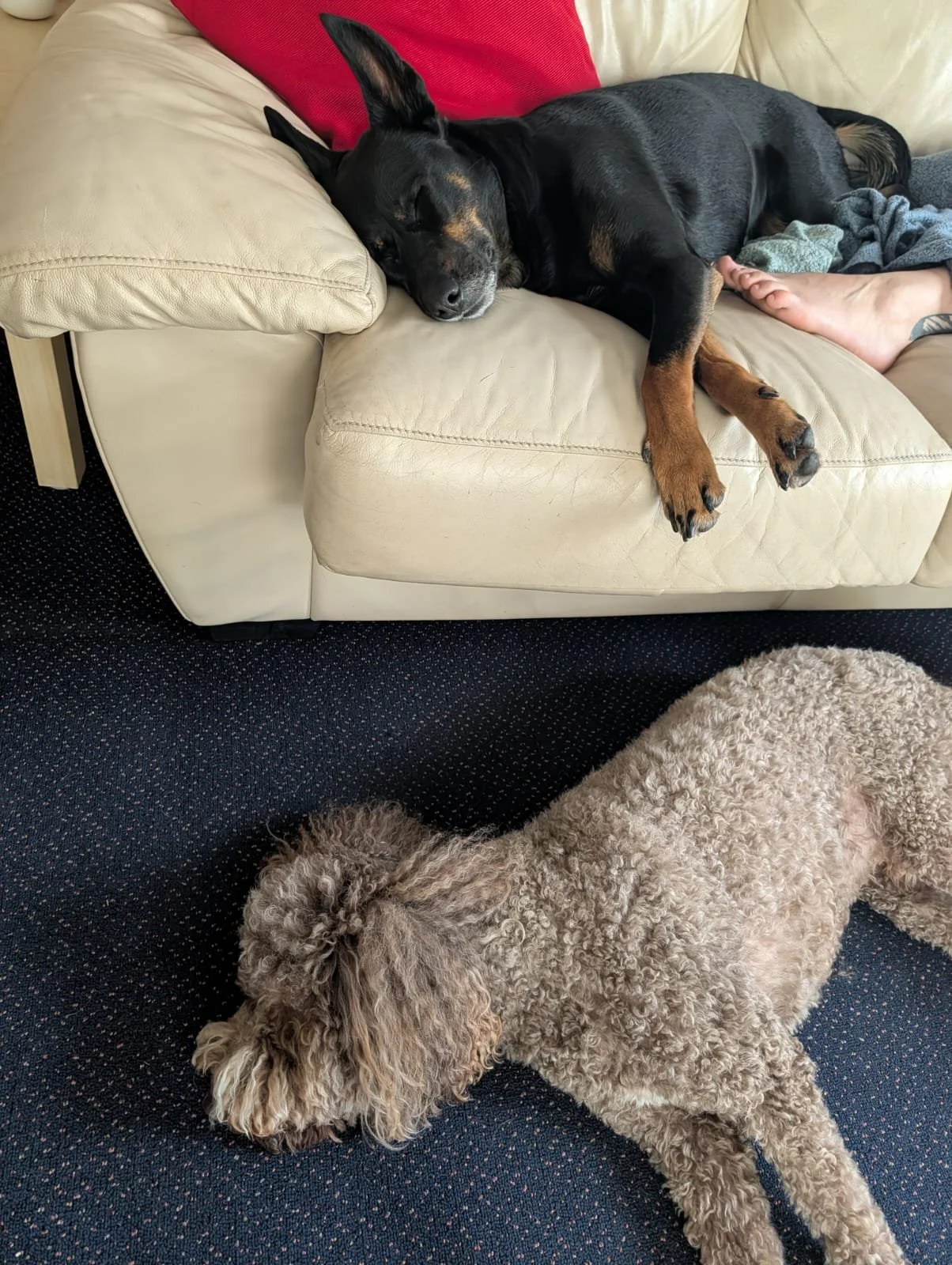
Chill time has just as much value as play time
What shared space makes possible
A dog-friendly trip creates conditions many dogs rarely get:
Extended time together, not just a short interaction.
A shared routine: meals, walks, rest, car rides, and the small transitions between them.
Novelty + recovery (exciting experiences balanced with genuine downtime).
A contained environment, where dogs can learn, “This is who’s here, and this is how we do things.”
When dogs share space for longer stretches of time, a different kind of learning becomes possible. Dogs begin to practise the quieter social skills that don’t show up in fast encounters: pausing, disengaging, and relaxing in the presence of another dog without needing constant interaction.
There’s also research suggesting that intraspecific contact (being with other dogs) can reduce stress behaviours and stress-related physiological measures in kennel or shelter contexts. Obviously a holiday cottage is not a shelter, but it’s still part of the same broader point: dogs are affected by social deprivation, and they can benefit from the right kind of dog-dog company.
So no, your dog doesn’t need a gaggle of random friends. But many dogs do benefit from at least one or two steady social relationships where they can practise being a dog with another dog, without the whole thing turning into a frenzied meet-and-greet or play session.
A quick note on compatibility
Before this turns into yet another thing to strive for, it’s important to note that dog friendships aren’t right for every dog.
Not every dog wants dog friends. Not every dog enjoys shared accommodation. Some dogs find other dogs stressful, even if they’re polite about it. Some dogs only like certain “types.” Some dogs are perfectly content with one familiar companion and have no interest in expanding their social circle.
Dog friendships aren’t something to collect or prove. They’re about welfare, preference, and fit. The goal isn’t “my dog has heaps of dog friends.” The goal is that your dog’s social needs are being met, in ways that feel safe, manageable, and genuinely enjoyable for them.
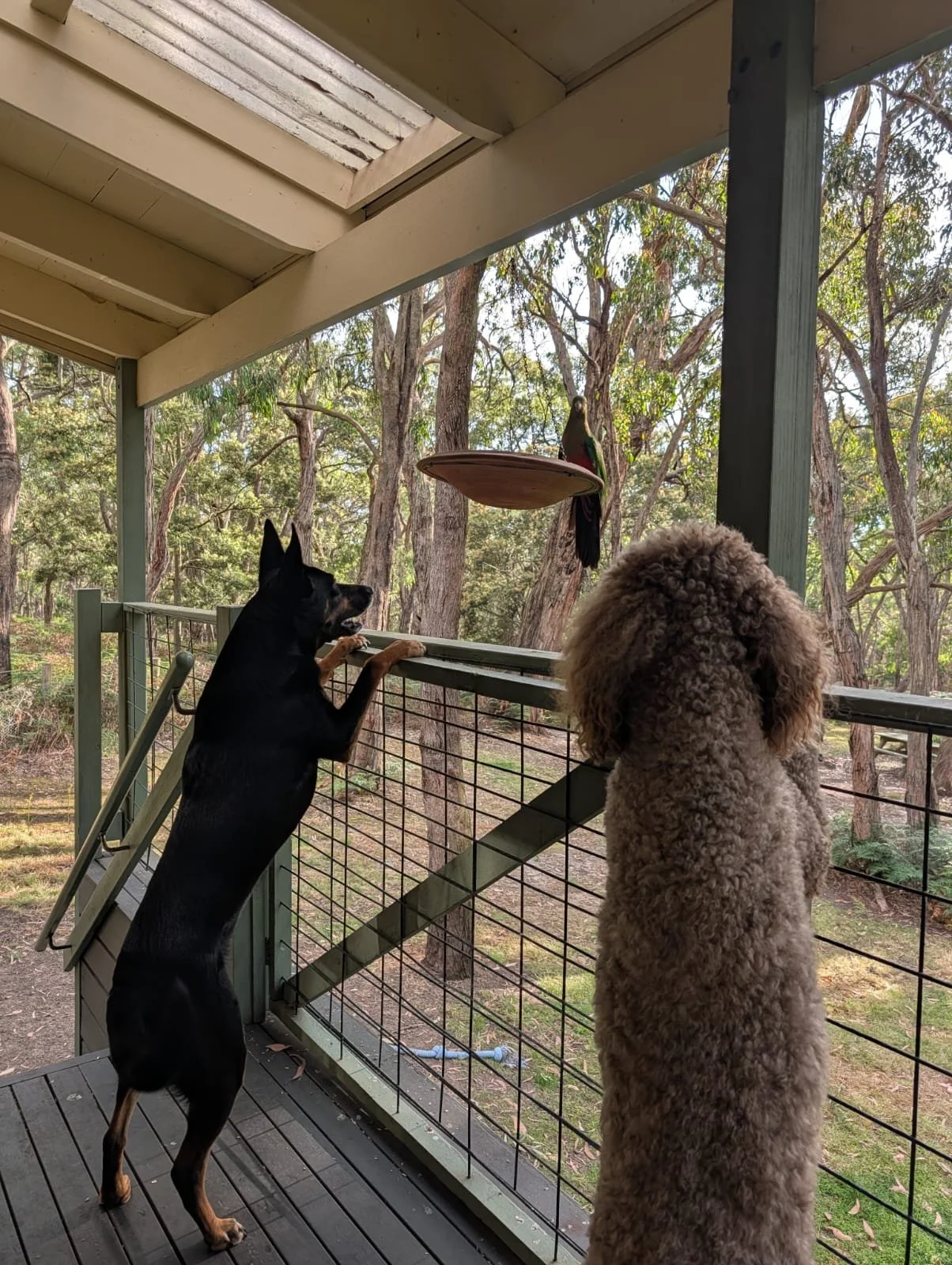
Bird watching is a passionate shared interest for these two
What helped on this trip (and what might help on yours)
If a dog-centric holiday with friends sounds appealing, here are a few things that helped make this one work:
Choose “compatible,” not just “friendly.”
Look for dogs whose play styles, arousal levels, and communication match reasonably well. The dog who body-slams everything that moves is not always a great match for the dog who prefers a gentle chase and then a nap.
Choose the right people, not just the right dogs.
Trips like this are easier with friends whose approach to dogs broadly aligns with yours. Talking through routines, boundaries, and expectations upfront, while staying curious about each dog’s needs, helps prevent unnecessary stress for everyone involved.
Expect the first day to be messy.
New place, new smells, shared space, heightened excitement. Arousal is normal. Plan for it rather than being disappointed by it. Our first night was definitely more lively than the second, which meant more breaks, chews, and, at one point, leads on indoors to help everyone settle.
Time-outs are not a failure.
Separating dogs for a rest isn’t a sign of incompatibility. In fact, it often protects their relationship. Think of breaks as keeping the relationship bank account in credit, while giving them much-needed rest.
Have a plan for the car.
Car sharing is intimate. Set it up so dogs can succeed: physical separation if needed, planned stops, and realistic expectations. At one point on our trip, we talked about leaving the dogs in the car while we popped into a shop. We decided against it. The risk was probably small, but it wasn’t worth testing their tolerance, or their relationship, for the sake of a minor convenience.
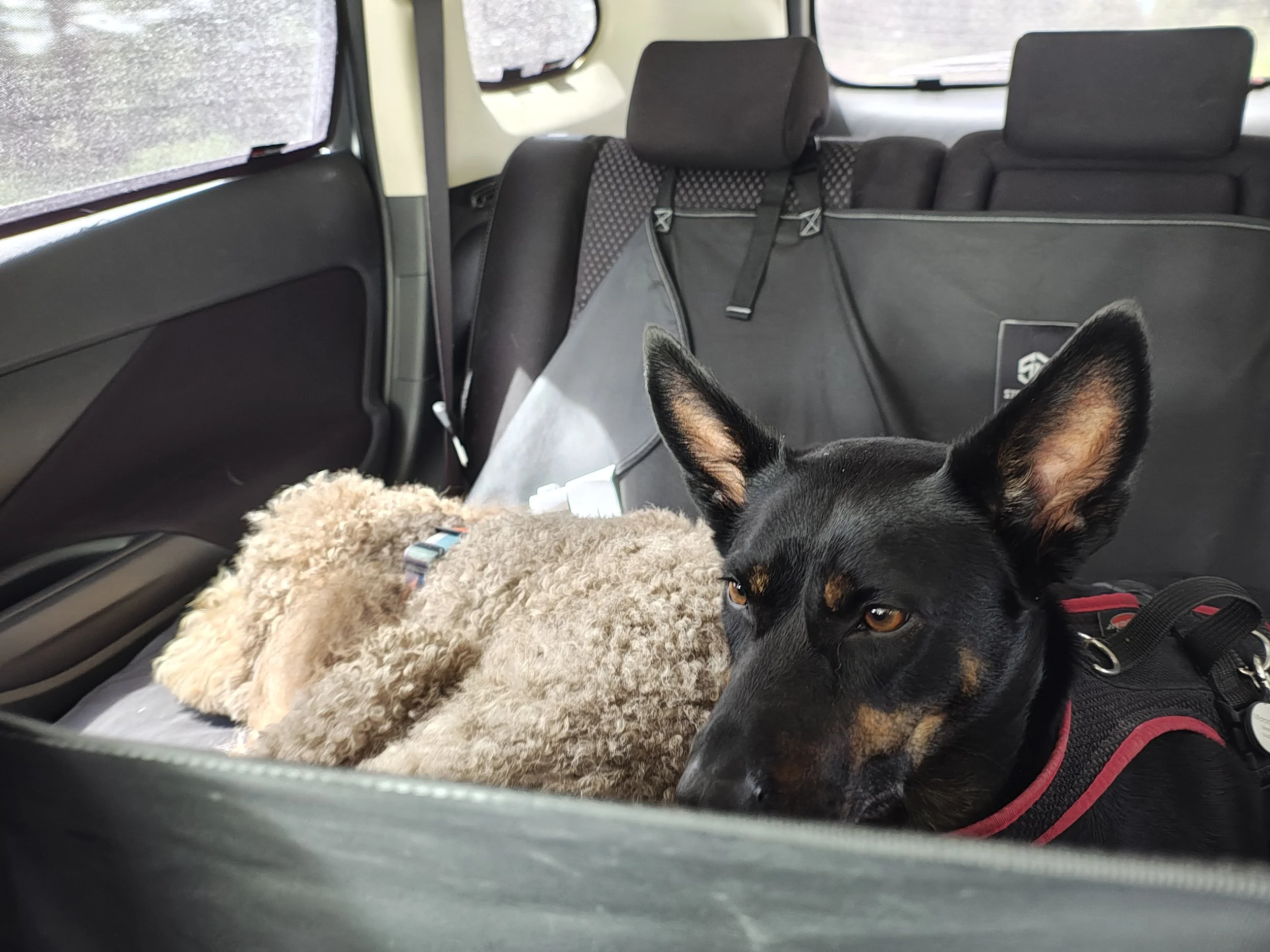
The car can be a potential place of tension but they coped very well (despite Zelda’s loud excited barking when we arrived somewhere new)
Step back without switching off.
The sweet spot is supervision without hovering. If play is reciprocal and both dogs are enjoying it, great. But many dogs, especially puppies and adolescents, struggle to regulate themselves, and long stretches of intense play aren’t healthy.
During the weekend, Ollie accidentally caught Zelda’s ear. She yelped and lunged, and he backed off immediately. Clear communication, received as intended. We didn’t punish or panic. We gave them a short break and a treat scatter, and soon after they were back to being besties.
If you’re seeing repeated attempts to disengage, freezing, hiding, or escalation, that’s your cue. Sometimes being a good guardian means stepping in briefly so everyone can come back calmer.
Make room for “boring together.”
The beach zoomies were excellent. Truly. High-speed joy, sand everywhere, no notes. But the moment that really mattered came later, when the dogs stopped needing everything to be a party. They lay around in the same space, peacefully coexisting.
That was when we could pour a glass of wine and actually finish a conversation. For many dogs, learning to be “boring” together is just as important as learning to play together, and a lot more useful for real life.
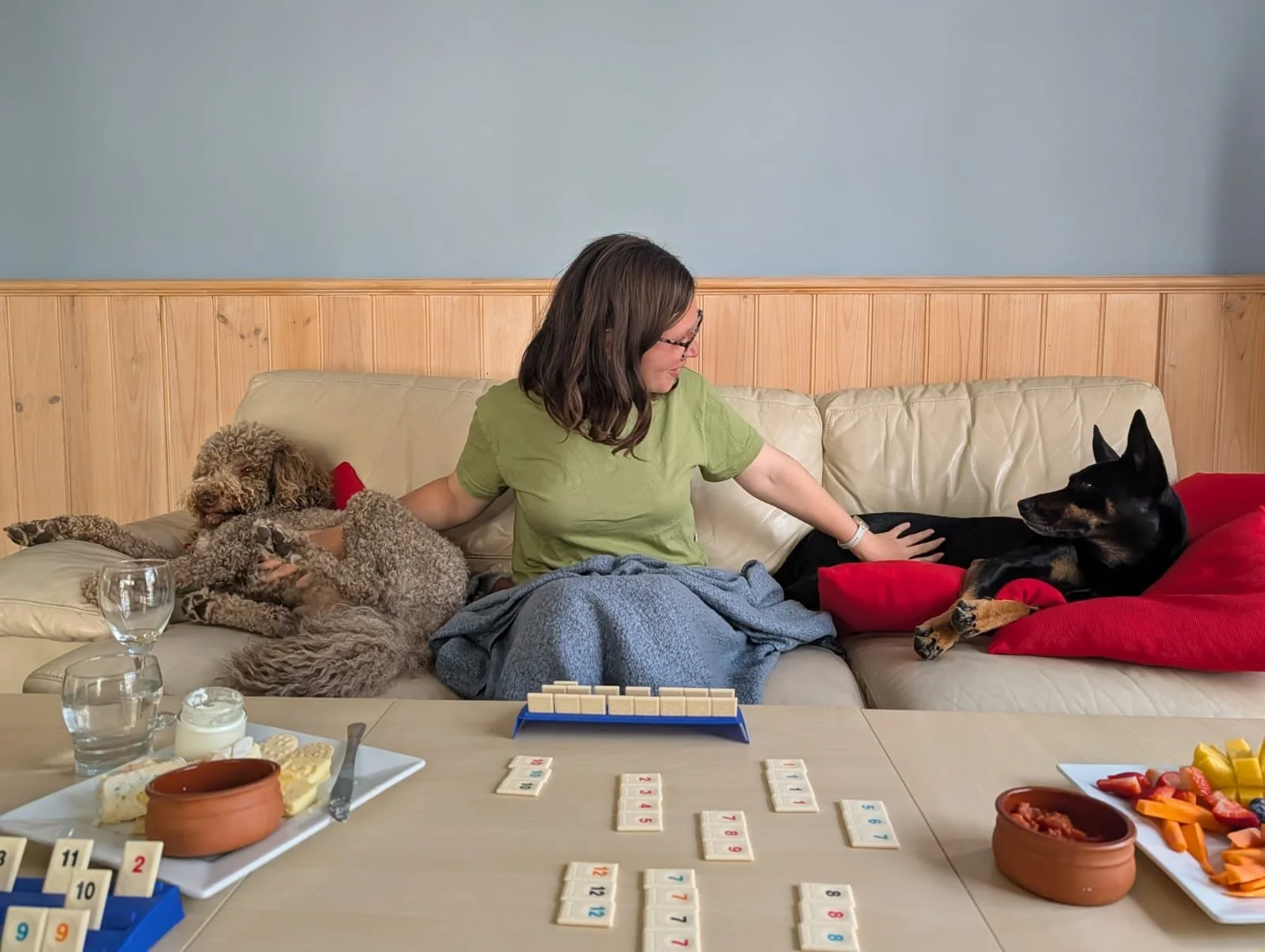
Once the dog needs were met, time for the humans to play!
The work of being together
Many dogs live socially busy lives that still lack depth. They may meet plenty of other dogs, yet rarely spend enough time with any of them to practise the skills that make shared life easier: sharing space, disengaging without friction, repairing small moments of tension, resting together once the excitement has passed.
This isn’t an argument for dog parks, or multi-dog households, or turning every dog into a social butterfly. It’s simply a reminder that social contact and social connection aren’t the same thing.
Given time, continuity, and the right conditions, dogs often show social skills that are quieter and more nuanced than constant friendliness or play. Those skills are easy to overlook, but they’re what make time away with friends (human and otherwise) so enjoyable.
(Big thanks to my wonderful friend Robxn for the good times + photos!)
References
Cimarelli, G., Marshall-Pescini, S., Range, F. and Virányi, Z. (2021). Relationship quality affects social stress buffering in dogs and wolves. Animal Behaviour, 179, pp. 227–238.
Corsetti, S., Natoli, E., Palestrini, C. and d’Ingeo, S. (2023). Intraspecific interactions decrease stress affecting welfare in shelter dogs. Animals, 13(2), 250.
Kikusui, T., Winslow, J.T. and Mori, Y. (2006). Social buffering: relief from stress and anxiety. Philosophical Transactions of the Royal Society B: Biological Sciences, 361(1476), pp. 2215–2228.
Sommerville, R., O’Connor, E.A. and Asher, L. (2017). Why do dogs play? Function and welfare implications of play in the domestic dog. Applied Animal Behaviour Science, 197, pp. 1–8.
Wu, A., Song, Z., Huo, Y. and Li, J. (2021). Social buffering of stress: physiological and ethological mechanisms. Applied Animal Behaviour Science, 236, 105273.
